
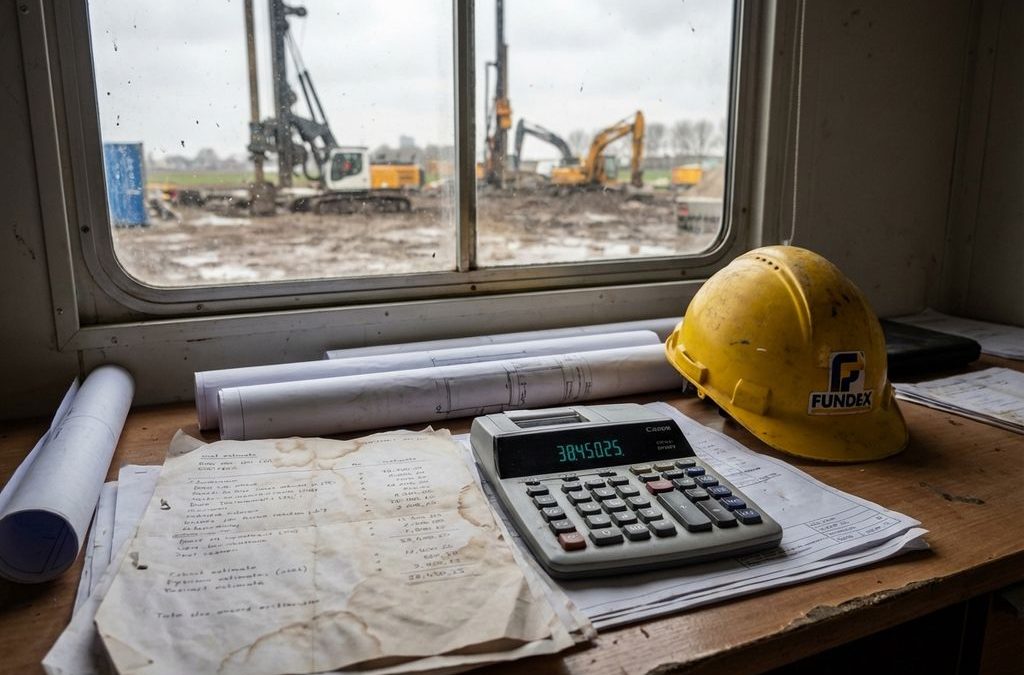
The cost of a foundation project varies widely depending on soil type, depth, accessibility, and the type of foundation. A realistic cost estimate requires thorough soil investigation and a comparison of different foundation methods. Vibration-free techniques may seem more expensive at first, but they often save costs through faster execution and less disruption. This guide covers the most important cost factors and helps you make informed choices for your foundation project.
What determines the cost of a foundation project?
The total cost of foundation work is determined by five main factors: soil type and conditions, desired depth, accessibility of the construction site, type of foundation, and project scope. These factors influence one another and, together, determine which foundation method is most suitable and cost-effective.
Soil conditions form the basis of every cost calculation. Very soft soil layers often require permanent casing systems, while very heavy soil layers require grout injection to achieve the desired bearing capacity. The soil’s cone resistance determines whether standard foundation piles are sufficient or whether specialized techniques are required.
The depth of the foundation directly affects material costs, labor hours, and the required equipment. Foundations up to 20 meters deep can be constructed using standard machinery, while deeper foundations of 40 meters or more rigs specialized rigs with higher daily costs.
Accessibility plays a crucial role in cost calculations. Confined spaces require compact machines with smaller footprints, which can affect productivity. Adjacent structures less than one meter away necessitate special bracing, which requires additional time and expertise.
How do you create a realistic cost estimate for foundation work?
A reliable cost estimate begins with a thorough site survey and ends with a comparison of at least three quotes from specialized foundation contractors. The process requires a systematic approach and realistic planning for all project phases.
Start by having soil borings and laboratory tests conducted to determine the exact soil layers and bearing capacity. This investigation costs between 2,000 and 8,000 euros, but it prevents costly surprises during construction. The results will determine which foundation methods are technically feasible.
Next, request detailed quotes from several specialized companies. Make sure all quotes include the same specifications: foundation type, depth, bearing capacity, accessibility, and completion time. Compare not only the total price, but also the price per linear meter or per pile.
Set aside 10–15% of the budget for unforeseen circumstances. Foundation projects involve inherent risks, such as unexpected soil conditions, weather-related delays, or design changes. A realistic contingency fund helps prevent budget overruns and project delays.
What are some common hidden costs associated with foundation projects?
Hidden costs in foundation projects include permits, additional soil testing, weather delays, changes during construction, and extra material costs due to unforeseen soil conditions. These costs can amount to 15–25% of the original budget if they are not adequately accounted for.
Permit fees vary by municipality and project type. Environmental permits for vibration-sensitive areas, building permits, and any required archaeological surveys can cost between 1,000 and 15,000 euros. Start the permitting process early to avoid delays.
Additional soil investigations are often necessary when the actual soil conditions differ from those indicated by the initial boreholes. This occurs in approximately 30% of projects and can cost an additional 2,000 to 10,000 euros, depending on the complexity of the investigation.
Weather conditions mainly affect projects during the winter and spring months. Frost, heavy rain, or strong winds can bring work to a standstill for days. However, machinery continues to run at daily rates, which can add an extra 500 to 2,000 euros per day.
Changes to the design during construction are common, especially in renovation projects. Existing foundations, cables, or pipes may require adjustments. Allow for an additional 5–10% in costs for such adjustments.
What is the cost difference between various foundation methods?
Traditional piles are often the least expensive per linear meter, but vibration-free methods such as screw piles offer overall advantages due to faster construction, less disruption, and better accessibility in confined spaces. The choice depends on soil conditions, environmental factors, and project-specific requirements.
Conventional piles generally cost the least per meter, but often require additional measures for vibration isolation and noise reduction in urban areas. These additional costs can offset the initial savings, especially in projects with strict environmental requirements.
Vibration-free techniques such aspiles piles higher material costs, but these are offset by more efficient installation and lower ancillary costs. They can be installed in spaces with limited headroom and on small job sites ranging from 2×3 to 9×14 meters, which reduces logistics costs.
Drilled piles grout injection are the most expensive option per meter, but they are indispensable in very heavy soil layers exceeding 20 MPa. They offer the highest bearing capacity and are suitable for extreme loads where other methods fail.
Modern electric pile-driving machines, such as the CD20E, are emission-free, a feature that is increasingly required in city centers. Although daily operating costs are slightly higher, they help avoid fines and delays caused by environmental restrictions.
When choosing a foundation method, it is important to consider not only the initial cost per square meter, but also the total project cost, including logistics, disruption, and construction time. Specialized foundation experts can help you weigh these factors and provide a cost-effective solution that meets your specific project requirements.
Frequently Asked Questions
How long does an average foundation project take and what does this mean for the costs?
An average foundation project takes 1–3 weeks, depending on the number piles the complexity of the project. Equipment costs range from 800 to 2,500 euros per day, so a longer project duration significantly increases the total cost. Vibration-free methods are often faster and, despite higher daily costs, can ultimately be more cost-effective.
What should I do if the ground conditions turn out to be different than expected during the project?
Stop work immediately and have additional soil testing conducted. Notify your contractor and, if necessary, the structural engineer of the deviations. Most experienced foundation contractors can propose alternative solutions, but expect an additional 10–30% in costs for changes to materials and methods.
Can I save money by purchasing the materials for my foundation project myself?
This is strongly discouraged for foundation work. Specialized contractors have contracts with suppliers for certified materials and assume full responsibility for quality and warranty. Purchasing materials on your own can lead to compatibility issues, loss of warranty, and ultimately higher costs.
What types of insurance and warranties should I require from my foundation contractor?
Eis minimaal een CAR-verzekering (Construction All Risk), beroepsaansprakelijkheidsverzekering van 2,5 miljoen euro en 10 jaar garantie op het funderingswerk. Controleer of de aannemer VCA-gecertificeerd is en lid van een branchevereniging. Deze verzekeringen kosten de aannemer geld, maar beschermen u tegen enorme risico’s.
How can I minimize the impact on my neighbors, and what will this cost me?
Kies voor trillingsvrije funderingsmethoden zoals Fundex- of schroefpalen, vooral binnen 25 meter van bestaande bebouwing. Informeer buren tijdig en overweeg een trillingsnulmeting (500-1.500 euro). Hoewel trillingsvrije methoden 10-20% duurder kunnen zijn, voorkomen ze schaderisico’s en juridische problemen.
What are the advantages of electric foundation machines, and do they justify the additional cost?
Electric machines such as the CD20E eliminate noise, emissions, and vibrations, making them ideal for urban projects and city centers. They cost 10–15% more per day, but they prevent fines for environmental violations and allow work to be carried out in areas where diesel machines are prohibited. More and more municipalities are making their use mandatory.