
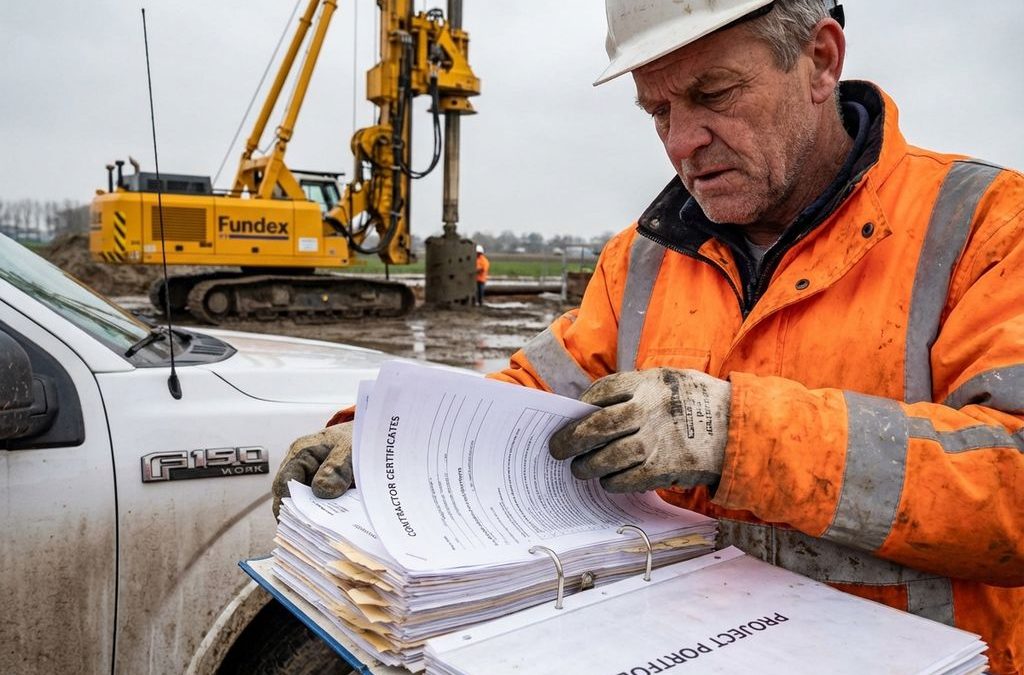
Choosing a reliable foundation contractor is essential to the success of any construction project. A good foundation contractor has years of experience, uses modern techniques, and operates with transparency. Key factors include technical expertise, certifications, references, and the use of vibration-free foundation methods. This guide answers the most frequently asked questions about selecting the right foundation partner.
What makes a foundation contractor reliable?
A reliable foundation contractor stands out thanks to years of experience, official certifications, and a proven track record in a wide range of foundation projects. They have modern equipment at their disposal and are skilled in multiple foundation techniques suited to various soil conditions.
Experience is the foundation of reliability. Contractors with more than 20 years of experience have encountered a wide range of soil conditions and project challenges. They understand which techniques are suitable for specific situations and can identify potential problems early on.
Certifications demonstrate professionalism and expertise. Look for contractors with VCA certification, quality management systems, and specific foundation certifications. These prove that the company meets safety and quality standards.
A comprehensive fleet of machinery is a sign of financial stability and technical capabilities. Modern machinery ensures more efficient execution and better results. Ask about the type of equipment used and whether it is suitable for your project.
Transparency in communication is a hallmark of reliable partners. They clearly explain their approach, provide realistic timelines, and are open about potential challenges. Good contractors share their expertise and advise on the best course of action.
What questions should you ask before hiring a foundation contractor?
Ask specific questions about experience with similar projects, foundation techniques used, project timelines, warranty terms, and available references. This information will help you make an informed decision.
Start by asking about project experience. Ask about projects that are similar in scope, site conditions, and location. A contractor who has tackled similar challenges before will be better able to assess what your project requires.
Ask about the proposed foundation method and why it was chosen. Ask for an explanation of the alternatives and the pros and cons of each method. A good contractor will be able to explain this in plain language.
Discuss the schedule and potential delays. Ask about factors that could affect the schedule, such as weather conditions or unexpected ground conditions. A realistic schedule helps prevent disappointment.
Ask about the warranty terms and what exactly is covered. Find out how long the warranty lasts and what procedures are followed in the event of any issues. Written warranties provide extra peace of mind.
Ask for recent references and contact information from past clients. Reputable contractors are happy to share their successes and, if you wish, will put you in touch with clients who are willing to discuss their experiences.
How can you identify modern foundation techniques that prevent vibrations?
Modern vibration-free foundation techniques, such as screw piles and patented systems, prevent ground vibrations by screwing piles the ground rather than driving them in. These methods are ideal for urban areas and sensitive construction sites.
Traditional foundation methods often cause vibrations and noise pollution due to piles driving. Modern techniques use a rotating motion, piles screwing piles into the ground. This process generates no vibrations and only minimal noise pollution.
You can recognize these techniques by the method used and the equipment involved. Vibration-free foundation installation uses special drilling machines that drive piles into the ground piles . The process is quieter and causes less disruption to the surrounding area.
Be sure to ask specifically about vibration-free alternatives if your project is located in a densely built-up area or near sensitive structures. These techniques protect existing buildings and minimize disruption to nearby residents.
Modern foundation contractors invest in sustainable equipment, such as electric-powered machines that operate without emissions. This demonstrates their commitment to environmentally friendly construction and future-proofing.
Find out about the options for working in confined spaces. Advanced techniques make it possible to install foundations in locations where traditional methods are not feasible, such as in tight inner-city environments.
What are the red flags to watch out for when selecting a foundation contractor?
Warning signs include unrealistic prices, a lack of transparency, missing insurance coverage, unclear contract terms, and a reluctance to share references. These signs point to potential unreliability.
Extremely low prices may indicate hidden costs or the use of inferior materials. Reputable contractors charge market-rate prices and can back up their pricing with detailed cost estimates.
A lack of transparency regarding methods, materials, or timelines is a red flag. Reputable contractors clearly explain their approach and answer questions without evasion.
Always make sure the contractor has adequate insurance. If the contractor does not have liability insurance, you may be held personally liable for any damage or accidents that occur during the work.
Unclear or incomplete contract terms do not provide adequate protection. A professional contractor uses clear contracts that specify the scope of work, costs, and responsibilities.
Be wary of contractors who are unwilling to provide references or who pressure you to make a quick decision. Reputable contractors will give you time to make an informed decision and take pride in their past projects.
Be wary of contractors who do not have a permanent business location or who can only be reached by phone. An established company with a physical location demonstrates stability and accessibility in case of any questions or issues.
Choosing a reliable foundation contractor requires careful consideration of experience, techniques, and transparency. Modern vibration-free methods offer advantages for urban projects, while clear communication and strong references build trust. By asking the right questions and recognizing red flags early on, you can find a partner who will make your project a success. For more information about professional foundation solutions, check out our services or request a quote.
Frequently Asked Questions
On average, how long does it take to complete a foundation project?
The duration of a foundation project depends on factors such as project size, soil conditions, and the chosen foundation technique. Installing a foundation for an average single-family home takes 2–5 days, while larger commercial projects can take several weeks. Vibration-free techniques are often faster than traditional methods because they require less preparation time.
What happens if unexpected soil conditions are encountered during foundation work?
If unexpected ground conditions are encountered, a professional contractor will halt work to assess the situation and propose alternative solutions. This may result in changes to the foundation design or additional costs. A reliable contractor will communicate transparently about these changes and explain why they are necessary before work resumes.
How can I check the quality of the foundation work while it is being done?
Vraag om tussentijdse rapportages met foto’s en metingen van de geplaatste palen. Een goede aannemer documenteert elke stap en kan uitleggen hoe diep de palen zijn geplaatst en welke draagkracht is bereikt. Laat je ook informeren over kwaliteitscontroles zoals belastingtests die tijdens of na de uitvoering worden uitgevoerd.
Is it possible to perform foundation work in the winter or in bad weather?
Modern foundation techniques are less weather-dependent than they used to be, but extreme conditions can slow down the work. Frost can affect soil conditions, while heavy rainfall can hinder access to the construction site. An experienced contractor plans with seasonal factors in mind and proactively communicates about potential delays.
What preparations are needed before the foundation contractor can begin?
Make sure the construction site is accessible to heavy machinery and that all necessary permits have been obtained. Notify neighbors about planned work and ensure that utility lines are marked to prevent damage. A good contractor will guide you through these preparations and provide a checklist of requirements.
How should I deal with neighbors who complain about noise during foundation work?
Communicate proactively with neighbors about the schedule and expected disturbances. While the use of vibration-free techniques minimizes disturbances, inform neighbors in advance about working hours and the expected duration of the work. A professional contractor adheres to permitted working hours and, if asked, can explain the chosen method to foster understanding.