
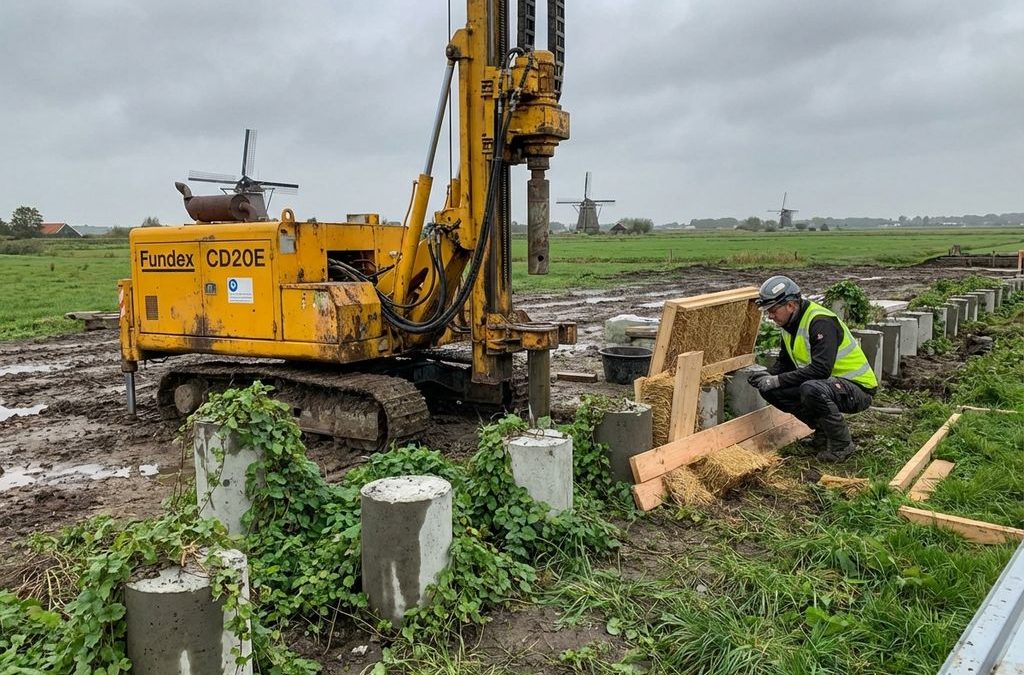
Environmentally friendly foundation work combines modern techniques, such as vibration-free methods and electric-powered machinery, to drastically reduce the environmental impact. This innovative approach minimizes noise pollution, prevents emissions, and protects the soil, whereas traditional foundation methods often cause vibrations, diesel emissions, and disruption to the surrounding area. An increasing number of construction projects are consciously opting for sustainable foundation solutions.
What makes traditional foundation methods bad for the environment?
Traditional foundation methods cause significant environmental problems due to vibrations, noise pollution, and diesel emissions. Conventional pile driving disrupts the soil structure, produces noise levels of up to 120 decibels, and generates CO2 emissions from diesel engines that run continuously during the foundation process.
The environmental impact of traditional foundation techniques manifests itself in various ways. Diesel-powered pile-driving rigs not only produce direct emissions on-site, but also generate vibrations that travel through the ground and can damage surrounding structures. These vibrations disrupt the underground ecosystem and can affect groundwater flow.
Noise pollution is a major problem in densely populated areas. The constant pounding of traditional pile-driving rigs limits working hours and leads to complaints from nearby residents. In addition, diesel engines consume large amounts of fuel, resulting in high CO2 emissions per pile driven.
The construction industry and government recognize these issues and are imposing increasingly stringent requirements on emissions and noise levels. Municipalities often enforce strict regulations on construction work in residential areas, making traditional foundation methods less and less suitable for modern construction projects.
What modern techniques make foundation work more environmentally friendly?
Modern foundation techniques reduce environmental impact through vibration-free installation and electric power. Innovative methods such as screw piles, bored piles hydraulic installation eliminate vibrations, while electric machinery completely eliminates direct emissions and drastically reduces noise levels.
Vibration-free foundation techniques operate on the principle of “piling without piling.” In this process, piles are screwed or pressed piles the ground rather than driven. These methods cause minimal soil disturbance and produce much less noise than traditional techniques.
Electric-powered foundation machines represent a major breakthrough. These machines produce no direct emissions and operate significantly more quietly than diesel alternatives. Energy consumption is also more efficient, as electric motors are more efficient than internal combustion engines.
Optimized drilling processes utilize advanced hydraulic systems that precisely control the required force. This reduces energy waste and prevents unnecessary soil disturbance. Smart material choices, such as the use of HVO100 fuel where electrification is not yet possible, can reduce CO2 emissions by up to 90%.
How do electric foundation machines work in practice?
Electric pile-driving machines such as the CD20E operate with zero emissions and produce significantly less noise than diesel alternatives. These machines can be connected to the power grid or use mobile battery systems, meaning they produce no on-site emissions and are suitable for projects with strict environmental regulations.
The practical operation of electric foundation equipment differs fundamentally from that of diesel-powered machines. Electric motors deliver their maximum torque immediately and operate much more precisely than internal combustion engines. This results in better control over the foundation process and less energy waste.
The energy consumption of electric machines is significantly lower because they only consume energy during active operation. Diesel machines run continuously at idle, even during breaks, whereas electric systems can be shut down immediately.
Electric machines deliver outstanding performance across a wide range of projects. In urban areas where noise pollution is a major concern, these machines can operate within the strictest noise standards. For projects aiming to achieve sustainability certifications, zero-emission machines are an essential part of the environmental strategy.
Practical considerations include the availability of electricity at the construction site and scheduling charging times for battery systems. However, modern electric pile-driving machines have a range sufficient to last a full workday without needing to recharge.
Why are more and more construction projects opting for vibration-free foundations?
Construction projects are increasingly opting for vibration-free foundations due to stricter environmental regulations and the need to protect existing structures. These techniques prevent damage to surrounding structures, minimize noise pollution for residents, and meet modern sustainability requirements that are increasingly being mandated by municipalities and clients.
From a regulatory perspective, the requirements for construction projects are becoming increasingly stringent. Municipalities enforce maximum vibration standards to protect historic buildings and existing homes. Projects that exceed these standards will not be granted a permit or will be required to implement costly mitigation measures.
The benefits for local residents are significant. Vibration-free foundations reduce the risk of cracks forming in nearby buildings and minimize noise and vibration disturbances. This results in fewer complaints and a smoother permitting process.
In densely built-up areas, vibration-free foundation work is often the only viable option. Traditional pile-driving rigs literally cannot be accommodated due to the risks they pose to surrounding structures. Modern techniques make it possible to install foundations even in very confined spaces without posing any risks.
Practical applicability plays a key role in the decision-making process. Vibration-free machines can operate in smaller spaces and have less of a logistical impact on the surrounding area. This speeds up projects and significantly reduces the overall construction time.
Which sustainability certifications are relevant for foundation projects?
Relevant sustainability certifications for foundation projects include BREEAM, GPR Gebouw, and Cradle to Cradle. These certifications evaluate environmental performance, with emission-free foundation techniques, noise reduction, and energy-efficient processes directly contributing to higher scores and the attainment of the desired sustainability labels.
BREEAM (Building Research Establishment Environmental Assessment Method) is an internationally recognized certification system that evaluates buildings for sustainability and energy efficiency. Environmentally friendly foundation techniques contribute to points in the “Pollution” and “Materials” categories through reduced emissions and sustainable construction processes.
GPR Building (Municipal Practice Guideline) is a Dutch assessment method that measures the environmental performance of buildings. Vibration-free and emission-free foundation methods score highly because they reduce the local environmental impact and contribute to a healthier living environment.
Cradle to Cradle certification considers the entire life cycle of materials and processes. Electric foundation machines powered by renewable energy and techniques that cause minimal soil disturbance support the circular principles of this certification system.
For project developers, these certifications provide added value in the form of higher rents, improved marketability, and compliance with increasingly stringent municipal requirements. Modern foundation techniques are an essential part of the sustainability strategy and can make the difference between achieving the desired certification levels and failing to do so.
Environmentally friendly foundation work is no longer an option, but a necessity in the modern construction industry. The combination of vibration-free techniques, electric machinery, and smart material choices offers a comprehensive solution for sustainable foundation projects. These innovations make it possible to meet strict environmental requirements while simultaneously improving the quality and efficiency of foundation work. For construction professionals considering switching to eco-friendly foundation methods, it is advisable to seek advice on the best techniques for their specific project.
Frequently Asked Questions
How do I choose the right eco-friendly foundation method for my project?
The choice depends on factors such as soil conditions, nearby structures, and project requirements. For urban areas, vibration-free screw piles are often ideal, while electric drill piles are suitable for larger projects. Have a specialist conduct a soil survey and environmental analysis to determine the optimal technique.
What are the additional costs of eco-friendly foundation construction compared to traditional methods?
Although the initial investment may be 10–20% higher, these costs are often offset by shorter construction times, fewer permitting procedures, and avoided repair costs. In addition, sustainability certifications can increase the value of the project and lead to lower insurance premiums.
Can electric pile-driving machines piles all types of piles ?
Modern electric machines are suitable for most types of foundations, including concrete piles, steel pipe piles, and screw piles up to 20 meters deep. For very heavy foundations or extreme depths, hybrid solutions using HVO100 fuel can be deployed to reduce emissions by up to 90%.
How long will the transition from diesel to electric foundation equipment take?
A phased transition typically takes 6–12 months, during which projects with strict environmental requirements are carried out using electric equipment first. Many contractors rent electric equipment initially to gain experience before investing in their own fleet.
What happens if there is no electrical connection available at the construction site?
Electric foundation machines can operate using portable battery systems that last 6–8 hours, or with temporary generators running on HVO100 fuel. For remote locations, hybrid machines are available that automatically switch between electric and clean internal combustion engines.
What warranties apply to damage-free foundations when using vibration-free techniques?
Professional contractors typically offer warranties against vibration damage to surrounding buildings. For added assurance, a baseline assessment is often conducted before work begins, so that any existing damage is documented and new damage can be ruled out.