
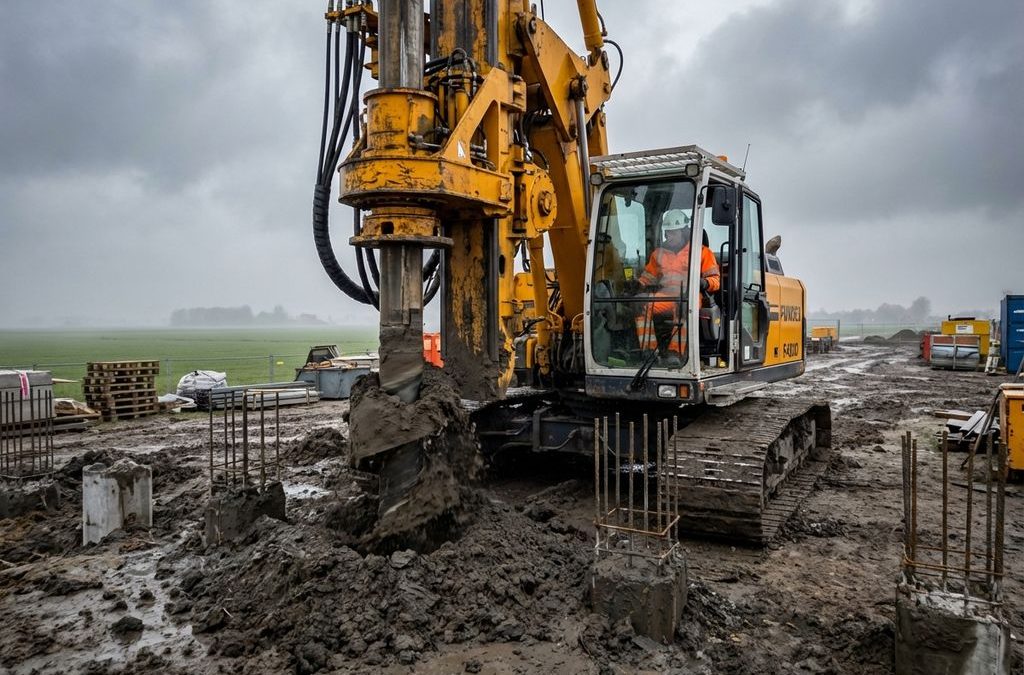
The foundation process is a systematic series of steps that ensures the stability and safety of any structure. From soil investigation to the final inspection, every foundation project goes through various phases, with modern techniques such as vibration-free foundation installation becoming increasingly important. The choice of a specific foundation method depends on factors such as soil conditions, the type of structure, and environmental requirements.
What exactly does the foundation process entail?
The foundation process encompasses all the work required to create a stable connection between a structure and the ground. This essential phase of construction ensures that loads from buildings, bridges, or other structures are safely transferred to the load-bearing soil layers. The process consists of several stages, each of which plays a crucial role in the final result.
The foundation literally forms the basis of every construction project. Without a solid foundation, no structure can function safely and durably. The process begins with a thorough investigation of soil conditions and ends with extensive inspections to ensure that all specifications have been met.
The various phases of the foundation process are closely interlinked. Each step builds on the previous one and influences the work that follows. This makes careful planning and execution of each component essential to the success of the entire project.
What steps are involved in foundation work?
Foundation work follows a set sequence of steps, beginning with a comprehensive soil investigation and ending with quality checks. Each step serves a specific purpose and must not be skipped in order to ensure a safe and durable foundation. The timing and execution of each phase are crucial to the final result.
The process begins with a soil investigation and design. Geotechnical investigations determine the bearing capacity and composition of the soil layers. Based on this data, the most suitable foundation method is selected, and technical drawings and specifications are prepared.
The preparatory phase involves clearing the site, constructing access roads, and positioning the equipment. During construction, the foundation elements are installed according to specifications. With modern techniques such as the Fundex method, a steel casing with a detachable drill bit is screwed down to the required depth, after which the reinforcement is installed and the casing is filled with concrete.
The process concludes with comprehensive inspections. Static tests measure compressive and tensile strength, ultrasonic tests verify the integrity of the piles dynamic tests confirm that all requirements have been met.
How does vibration-free foundation work in practice?
Vibration-free foundation installation uses screw and pressure techniques instead of traditional pile driving to install foundation elements into the ground. This modern method virtually eliminates vibration and noise pollution, making it ideal for projects in densely populated areas. The principle is often described as “pile driving without pile driving.”
The technique works by combining axial pressure and torque. In the Fundex method, a steel guide pipe with a loose drill bit is screwed into the ground. The rotating motion and downward pressure displace the soil without causing shocks or vibrations.
For local residents, this represents a revolution in construction comfort. Whereas traditional pile driving produces deafening noise and vibrations that can cause damage to nearby buildings, vibration-free foundation work is virtually silent. This makes it possible to work even in sensitive environments such as hospitals, schools, or historic city centers.
Modern electric foundation machines make the process even more sustainable. These machines operate with zero emissions and produce minimal noise, contributing to a cleaner and quieter construction site for both workers and the surrounding area.
What factors determine which foundation method is chosen?
The choice of foundation method depends on a combination of technical, environmental, and project-specific factors. Soil conditions form the basis for this decision, but spatial constraints, environmental sensitivity, and structural requirements also play a crucial role. Professionals analyze all these aspects to determine the optimal solution.
Soil conditions are the most important determining factor. In very soft soil layers (1–20 MPa),piles arepiles the best choice, as deformation of the pile shaft cannot occur. For heavier soil layers, grout injection techniques can be used to achieve higher bearing capacities.
Environmental factors play a major role in the decision. In densely built-up areas or near sensitive structures, vibration-free foundation installation is often the only viable option. Spatial constraints determine which equipment can be used: some machines can operate in areas with low ceilings or on small work sites.
Project-specific requirements, such as loads, temporary or permanent use, and sustainability goals, influence the choice of method. Modern projects increasingly call for zero-emission solutions, leading to a growing preference for electric foundation equipment.
The foundation process requires expertise and experience to properly weigh all factors. Given the complexity of modern construction projects and the increasing demands regarding sustainability and environmental impact, choosing the right foundation method is becoming increasingly important. For advice on your specific project, please contact us through our website, where we will be happy to discuss a suitable solution with you.
Frequently Asked Questions
How long does an average foundation project take from start to finish?
The duration of a foundation project varies greatly depending on its size and complexity. A single-family home can have its foundation laid within 1–2 days, while large commercial projects can take several weeks. The soil investigation and preparation phase usually take 2–4 weeks before the actual construction begins.
What is the cost of vibration-free foundation installation compared to traditional methods?
Vibration-free foundation installation is initially 10–20% more expensive than traditional pile driving, but often saves costs due to faster construction and the avoidance of compensation for damage to surrounding properties. In urban areas, total project costs are often lower because vibration-reduction measures are not required and there is less disruption to nearby residents.
How deep can foundation piles be driven using modern techniques?
Using modern drilling and driving techniques, piles can be installed piles depths piles 25–30 meters, depending on soil conditions and the type of equipment. Specialized systems are available for extreme depths of up to 60 meters, although this is less common for standard construction projects.
What permits are required for foundation work in urban areas?
Foundation work typically requires a building permit, possibly a demolition permit, and often a permit to use public space. In historic city centers or near historic landmarks, additional permits may be required. It is advisable to begin all permit procedures 6–8 weeks before the start of the project.
How is the quality of a foundation checked after installation?
Quality control is performed through various tests: static load tests measure load-bearing capacity, ultrasonic integrity tests verify pile quality, and dynamic tests confirm compliance with specifications. These tests are conducted within 28 days of installation and are mandatory for structural foundations.
Can existing foundations be reinforced without demolishing the building?
Yes, existing foundations can be reinforced using micropiles, grout injection, or support piles. These techniques are often used in renovation projects or when the load on a building increases. The work can usually be carried out while the building remains in use.
What happens if unexpected soil conditions are encountered during the foundation work?
If unexpected soil conditions are encountered, work is temporarily halted to conduct additional soil investigations. Based on the new data, the foundation design is modified and, if necessary, a different method is selected. This may result in additional work, but it is essential for the safety and stability of the structure.