
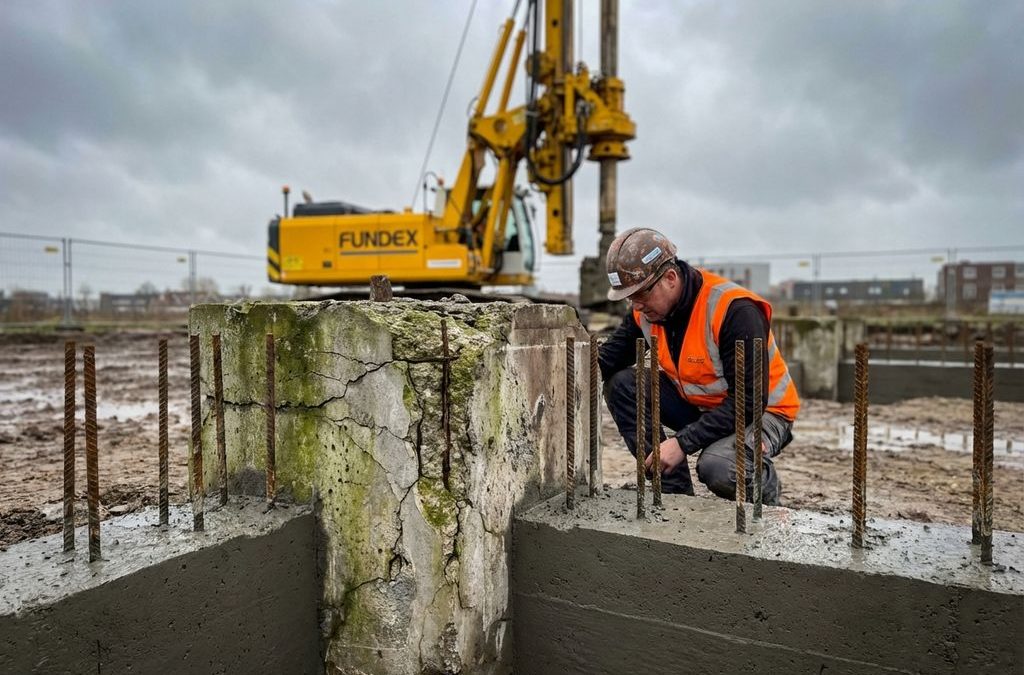
The service life of foundations varies greatly depending on the type and application. Modern vibration-free foundations, such aspiles, often last 50 to 100 years, while traditional wooden piles last piles 20 and 60 years. The actual lifespan depends on soil conditions, material type, load, and maintenance. This guide answers frequently asked questions about the durability of different foundation types.
What actually determines the lifespan of a foundation?
The service life of a foundation is determined by four main factors: soil conditions, material type, load, and environmental influences. Aggressive soil types with a low pH value corrode materials more quickly, while stable soil layers provide better protection for the foundation.
Soil conditions play a crucial role in durability. In very soft soil layers, traditional piles can piles or fail, drastically reducing their service life. Modern systems, such aspiles, have been specifically developed for these conditions and maintain their structural integrity, even in soil layers ranging from 1 to 20 MPa.
The quality of the materials used largely determines how long a foundation will last. Steel pipes with a high-quality coating offer better protection against corrosion than untreated materials. The load on the foundation is also a determining factor: overloading significantly shortens its lifespan.
Environmental factors, such as groundwater levels, soil chemistry, and temperature fluctuations, influence the aging process. Foundations in industrial areas with contaminated soil often have a shorter lifespan than those in clean environments.
How long do different types of foundations last?
Modern foundation types have significantly longer lifespans than traditional methods.piles piles typicallypiles 75 to 100 years, while traditional wooden piles last piles 20 and 60 years, depending on groundwater conditions.
Here is an overview of the expected service life for each type of foundation:
- piles: 75–100 years, thanks to vibration-free installation and high-quality materials
- Tubexpiles: 80–100 years, ideal for very soft soil layers
- Combined piles with grout injection: 70–90 years, suitable for heavy loads
- Drilled pipe piles: 60–80 years, depending on soil conditions
- Traditional wooden piles: 20–60 years, depending largely on the groundwater level
piles economic benefits with a service life of around 70 years, while providing greater resistance to lateral forces. Twin-tube pile walls combine durability with versatility and typically last 60 to 85 years.
Special applications, such as Fundex Energy Piles, maintain their load-bearing capacity throughout their entire service life while also delivering energy savings. These innovative piles 20 times less energy for cooling and 5 times less for heating compared to traditional systems.
Why do vibration-free foundations have a longer service life?
Vibration-free foundation techniques, such as the Fundex method, preserve the structural integrity of both the foundation and surrounding structures. Because there is no vibration during installation, no damage occurs to the pile or to existing foundations in the surrounding area.
The vibration-free process ensures that the soil around the pile remains pile . With traditional pile driving, vibrations can damage the soil structure and create weak spots that can lead to problems later on.piles , as it were, screwed into the ground, thereby preserving the soil’s natural compaction.
This method is 100% soil-displacing, without causing soil relaxation or a reduction in cone resistance. This creates an optimal bond between pile the soil, which remains stable throughout the entire service life. The piles withstand significant compressive and tensile forces without deformation.
For very soft soil conditions, the Tubex system offers additional advantages, as deformation of the pile shaft cannot occur. The permanent steel casing protects the pile aggressive substances in the soil and maintains its load-bearing capacity throughout its entire service life.
Vibration-free techniques can also be used in confined spaces and close to existing structures without risk of damage. This makes it possible to renovate and densify built-up areas without shortening the lifespan of surrounding foundations.
How can you extend the life of your foundation?
Regular inspections and preventive maintenance can significantly extend the service life of foundations. Early detection of problems prevents costly repairs and structural damage. Professional monitoring techniques help accurately assess the condition of foundations.
Preventive maintenance begins with monitoring the groundwater level and soil conditions. Changes in these factors can affect the load on foundations. For wooden piles , maintaining a stable groundwater level piles crucial for a long service life.
Modern testing methods provide insight into the current condition of foundations:
- Static tests: measuring both compression and tension to determine the load-bearing capacity
- Ultrasonic testing: verifying the integrity of the pile structure
- Dynamic tests: assessing pressure resistance and condition
In new construction, choosing sustainable foundation techniques can drastically reduce maintenance costs. Systems such as Fundex Energy Piles combine a long service life with energy savings, ensuring they remain valuable for decades.
A professional inspection is recommended if you notice signs of settlement, cracks in the structure, or changes in the surrounding area. Early intervention can often prevent the need for complete replacement. For specific situations, our specialists can develop a maintenance strategy tailored to your foundation type and conditions.
Investing in high-quality, long-lasting foundations pays off through lower maintenance costs and a reduced risk of structural problems. For advice on the best foundation solution for your project, please contact us for a free quote.
Frequently Asked Questions
How do I know when my foundation needs to be replaced?
Watch for warning signs such as cracks in walls, doors that no longer close properly, sagging floors, or visible structural distortion. If in doubt, it’s wise to have a professional inspection performed before minor issues turn into costly structural damage.
Can I reinforce an old foundation instead of replacing it?
Yes, in many cases, an existing foundation can be reinforced using techniques such as support piles, grouting, orpiles. This is often more cost-effective than complete replacement, especially for historic buildings or in densely built-up areas where vibration-free methods are essential.
How much does it cost to maintain modern foundations compared to traditional ones?
Modern foundations, such aspiles minimal maintenance over their 75- to 100-year lifespan. Traditional wooden piles , require regular inspection and may incur replacement costs after 20 to 40 years, making modern systems more cost-effective in the long run.
How does climate change affect the lifespan of my foundation?
Climate change can lead to fluctuating groundwater levels, longer periods of drought, and more extreme weather conditions. This has piles particularly piles impact on wooden piles . Modern steel foundation systems are better able to withstand these changes and maintain their stability even under fluctuating conditions.
What guarantees do I get with modern foundation techniques?
Professional foundation companies typically offer 10- to 20-year warranties on workmanship and materials. Premium systems such aspiles oftenpiles a longer warranty period. Always ask about the specific warranty terms and what is and isn’t covered.
Can I check the condition of my foundation myself?
You can perform basic checks yourself, such as inspecting for cracks, checking door and window frames, and verifying floor levels. However, a thorough assessment of the foundation’s condition requires professional techniques such as soil testing, drilling, and static load tests, which can only be performed by specialists.
How long does it take to replace a foundation, and can I continue living in my home?
The duration depends on the size of the project and the chosen technique. Vibration-free methods such as Fundex can often be completed within a few weeks with minimal disruption. In many cases, you can continue living in your home, especially with phased construction where only certain sections are addressed at a time.