
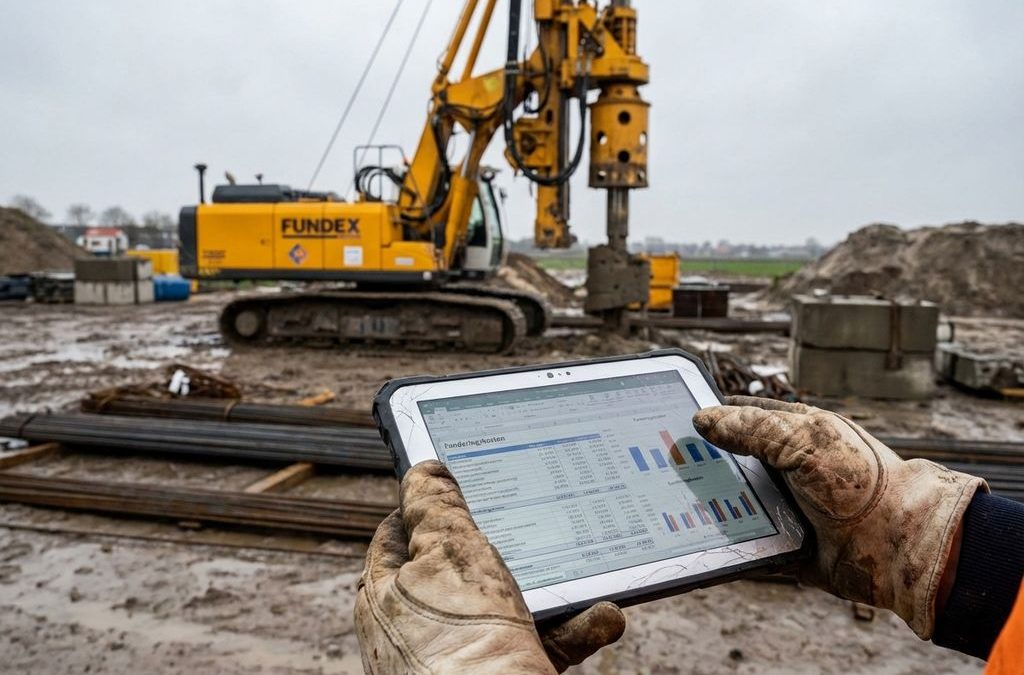
The cost of foundations varies considerably, depending on factors such as soil conditions, foundation type, and project size. Traditional pile driving methods typically cost between €50 and €120 per linear meter, while vibration-free techniques range from €80 to €200 per linear meter. The total investment depends on the technical complexity, site accessibility, and the chosen foundation method.
What factors determine the cost of foundations?
The final price of foundation work is determined by five main factors: soil conditions, type of foundation, project size, location accessibility, and technical complexity. These elements influence each other and can cause the total costs to vary considerably.
Soil conditions play the biggest role in determining costs. Soft soil layers between 1 and 5 MPa often require permanent casings, such aspiles, which increases costs. Very hard soil layers above 20 MPa necessitate grout injection, which also increases costs. Soil layers between 1 and 20 MPa are ideal for standardpiles offer the most cost-effective solutions.
The size of the project has a pile impact on the price per pile . Large projects benefit from economies of scale because mobilization costs are spread over more piles. For small projects, installation and transport costs are more significant.
The accessibility of the location determines which machines can be used. Limited spaces require compact rigs, which means longer installation times. The minimum distance to adjacent structures is approximately 0.9 meters at right angles, which requires special techniques in tight situations.
How much does foundation work cost per square meter or per pile?
Foundation costs vary between €50 and €200 per linear meter, depending on the method chosen. Traditional pile driving costs between €50 and €120 per meter, while vibration-free techniques cost €80 to €200 per meter. For standard residential construction, the cost per square meter is typically €15 to €45.
For standardpiles in normal soil conditions, the costs range between €80 and €140 per linear meter. This method is suitable for soil layers of 1 to 20 MPa and offers excellent value for money due to its vibration-free nature.
piles a permanent steel tube cost between €120 and €200 per linear meter. This higher investment is justified by their suitability for very soft soil layers and their ability to withstand high compressive and tensile forces without deformation of the pile shaft.
Grout injection systems are at the upper end of the price spectrum (€150 to €250 per meter), but are indispensable for very heavy soil layers above 20 MPa. The use of prefab pile elements eliminates the risk of discontinuous pile shafts.
The cost calculation must take into account the erection dimensions. Common erection sites range from 7 x 12 meters for standard projects to 9 x 14 meters for heavier applications, which affects the required workspace and additional costs.
What is the difference in cost between traditional pile driving and vibration-free foundation construction?
Vibration-free foundations typically cost 15 to 30% more than traditional pile driving, but offer significant savings on indirect costs. Traditional pile driving costs €50 to €120 per meter, while vibration-free methods cost €80 to €200 per meter, depending on the specific technique.
The additional costs for vibration-free techniques are often offset by lower indirect costs. No vibration nuisance means no risk of damage to adjacent properties, which prevents costly claims and repair work. There is also no need for expensive vibration measurements or monitoring of nearby buildings.
Traditional pile driving often requires extensive preparation, such as vibration testing and inspection of surrounding buildings. These preparation costs can amount to an additional €5,000 to €15,000, depending on the project size and environmental sensitivity.
Vibration-free methods, such as the Fundex technique, are 100% soil displacement, without soil relaxation. This maintains cone resistance and prevents soil removal, as the soil is pushed aside. The only noise comes from the drilling machine, which minimizes noise pollution.
For projects in densely built-up areas or near sensitive structures, the advantages of vibration-free foundations often outweigh the additional costs. The ability to work up to 0.9 meters from adjacent structures without risk of damage often makes these techniques the only viable option.
How can you best plan your foundation budget?
Effective budget planning for foundation work begins with obtaining multiple detailed quotes based on soil testing. Reserve 10 to 20% extra budget for unforeseen circumstances and make a conscious choice between cost price and risk minimization.
Start with a thorough soil investigation to determine the right foundation method. Soft soil layers below 5 MPa require different techniques than heavy layers above 20 MPa. This choice largely determines your budget, because an incorrect assessment will lead to costly adjustments.
Request quotes from several specialized foundation companies. Compare not only prices, but also methodologies, warranty conditions, and references. A slightly higher investment in proven techniques often prevents much more expensive problems later on.
Take seasonal influences into account. Winter months can mean up to 10 to 15% higher costs due to difficult working conditions. Planning in the spring or summer often offers better prices and better availability of specialized equipment.
Consider the total life cycle costs, not just the initial investment. Sustainable technologies, such as energy poles, combine foundations with heat exchange and use up to 20 times less energy for cooling and 5 times less for heating than traditional systems.
For complex projects, it may be advisable to contact specialist foundation companies at an early stage for advice on optimal methods and realistic budgeting. A professional quote based on project-specific circumstances provides the best basis for reliable cost planning.
Frequently Asked Questions
How long does an average foundation project take, and what schedule should I adhere to?
A standard foundation project for a home takes 1-3 days, depending on the number piles the technique chosen. For larger projects, allow 15-25 piles day under normal conditions. Allow 2-4 weeks of preparation time for permits and soil testing, and take into account weather conditions that may delay the work.
What happens if unexpected soil layers are encountered during pile driving?
If unexpected soil conditions are encountered, work is halted for a reassessment. The foundation contractor will adjust the method or switch to a more suitable technique, such as switching from Fundex topiles soft soil layers. This can result in 10–30% additional costs, which is why thorough preliminary investigation is essential and a contingency budget of 15–20% is recommended.
What permits do I need for foundation work and how much do they cost?
For most foundation projects, you will need an environmental permit, which costs between €500 and €1,500 depending on the municipality and project size. Vibration-free techniques are often subject to fewer restrictions. Additional permits may be required for work near monuments or in protected areas. Start the application process 6-8 weeks before the planned execution.
How do I check whether the foundation that has been laid meets the quality requirements?
Have the pile quality checked by an independent inspection agency that performs pile integrity tests (PIT). These tests cost €50-€100 per pile provide certainty about the load-bearing capacity and continuity. Also request a detailed report of the work performed, including reach depths and materials used per pile.
Can I save on foundation costs by doing some of the work myself?
Foundation work requires specialized knowledge and equipment, so the actual pile driving must always be done by professionals. You can save costs by clearing the construction site yourself, constructing temporary access roads, or arranging for soil removal. This can save 5-10% of the total costs, but consult your contractor first about the possibilities.
What are the long-term maintenance costs of different foundation techniques?
Modern foundation techniques such as Fundex andpiles minimal maintenance and last 50-100 years. Traditional concrete piles have similar lifespans. Energy Piles the added benefit of energy savings of €300-€800 per year on your energy bill. Inspection every 10-15 years (€500-€1,000) is sufficient for monitoring the condition of the foundation.