
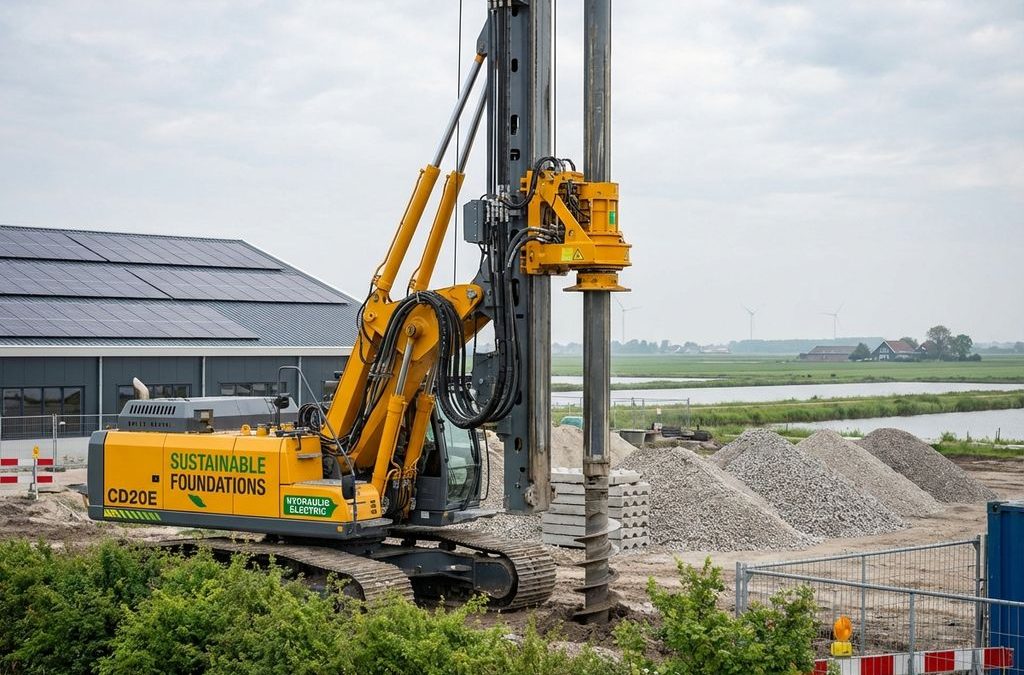
Sustainable foundation solutions are environmentally friendly techniques that drastically reduce CO2 emissions and noise pollution associated with traditional pile driving. These modern methods combine vibration-free foundation installation with electrically powered machinery and reusable materials. Innovative installation techniques ensure a long service life with minimal environmental impact, which is essential for future construction projects.
What exactly are sustainable foundation solutions?
Sustainable foundation solutions are environmentally friendly foundation techniques that minimize the negative impact on the environment, the surrounding area, and residents. These solutions are characterized by three core principles: a drastic reduction in CO2 emissions and noise pollution, the use of energy-saving technologies such as electric drives, and a long service life that prevents the need for repeated interventions.
The difference from traditional foundation methods is significant. While conventional pile driving causes vibrations, noise, and emissions, sustainable techniques operate on the principle of “pile driving without pile driving.” piles , as it were, screwed into the ground, meaning the surrounding area is not affected by vibrations and work can be carried out on relatively small areas.
Modern sustainable foundation solutions use HVO100 fuel, which reduces local CO2 emissions by 90 percent. Fully electric machines eliminate local emissions entirely. These technologies are not only better for the environment, but also more practical for inner-city areas where noise pollution and vibrations are unacceptable.
Why are traditional foundation methods no longer sufficient?
Traditional foundation methods no longer meet modern standards for sustainability and environmental quality. Conventional pile driving causes significant noise pollution, vibrations that can damage surrounding buildings, and high CO2 emissions from diesel-powered machinery. This impact has often become unacceptable in densely built-up urban environments.
Changing laws and regulations play a crucial role in this development. Municipalities are imposing increasingly strict requirements regarding noise pollution and working hours. ESG (Environmental, Social, Governance) guidelines for 2030, 2040, and 2050 are driving the construction sector toward greater sustainability. Projects are aiming for certifications such as BREEAM Excellent, for which sustainable foundation techniques are essential.
Furthermore, traditional methods face limitations in confined spaces and near sensitive structures. The risk of damage from vibrations, the need for large worksites, and noise pollution often make conventional foundation methods impractical. Public tolerance for noisy construction work is declining, while the demand for comfort and quality of life is increasing.
What modern techniques make foundations truly sustainable?
Modern sustainable foundation techniques are based on vibration-free foundation installation, combined with electric power and advanced installation methods. The most significant innovations include patented pile installation techniques that drive piles into the ground piles vibrations, fully electric drilling rigs that operate emission-free, and energy piles that not only provide structural support but also generate renewable energy.
Electric-powered, compact foundation machines completely eliminate local emissions and produce minimal noise. These machines can operate in confined spaces and do not cause vibrations, making them ideal for inner-city projects. The combination of vibration-free technology and electric power results in a completely different experience of construction work for the surrounding community.
Innovative energy piles combine the load-bearing function of the foundation with heat exchange through the ground. This technology uses twenty times less energy for cooling and five times less for heating compared to traditional systems. Pipes embedded in the reinforcement cage allow geothermal energy to be absorbed or released, contributing to energy-efficient buildings.
Reusable materials and advanced grout injection techniques significantly extend the service life of foundations. Specialized techniques, such as multifunctional shafts, provide solutions for water storage, treatment, and foundation support all in one system, further reducing the overall environmental impact.
How can you identify a reliable and sustainable foundation specialist?
You can recognize a reliable, sustainable foundation specialist by their proven experience with innovative techniques, a modern fleet of electric and zero-emission machinery, and concrete reference projects in which sustainability goals have been achieved. Look for specialists who have been actively working on sustainability for years and who actually receive contracts specifically because of their sustainability efforts.
The equipment fleet is a key indicator. Reputable specialists have fully electric drilling rigs, machines that run on HVO100 fuel, and specialized equipment for vibration-free foundation work. They must be able to demonstrate that their equipment is equipped with Stage V low-emission engines or operates entirely on electric power.
Certifications and compliance with future regulations are essential. Ask about their preparations for ESG guidelines for 2030, 2040, and 2050. A reliable partner can provide concrete examples of projects with BREEAM Excellent certification or comparable sustainability standards.
Technical expertise is demonstrated by proficiency in various sustainable foundation techniques. They must be able to explain how their vibration-free methods work, the advantages of electric drive systems, and how they handle confined spaces and environmental requirements. More than seventy years of experience in foundation techniques, combined with active innovation, makes them a reliable partner.
Sustainable foundation solutions are the future of the construction industry. By choosing vibration-free techniques, electric drives, and innovative energy piles, you contribute to a more sustainable built environment. For specific project advice on sustainable foundation solutions, please contact us via our quote page or learn more about our sustainable foundation services.
Frequently Asked Questions
What is the cost of sustainable foundation solutions compared to traditional methods?
Although sustainable foundation solutions may be slightly more expensive initially, they pay for themselves through lower operating costs, shorter project timelines due to reduced disruption, and higher property values. Furthermore, stricter regulations are making traditional methods increasingly costly due to fines and restrictions.
How long does it take to install vibration-free foundations?
Vibration-free foundations can often be installed more quickly than traditional piles because no rest periods are required between driving operations, and the schedule can be more flexible. The exact duration depends on the soil type, pile length, and accessibility of the site.
Can sustainable foundation techniques be used in all types of soil?
Modern sustainable foundation techniques are suitable for most soil types in the Netherlands, ranging from soft clay to hard sand layers. Specialized techniques are used for extreme soil conditions, such as very hard layers or contaminated soil. A soil investigation determines the most suitable sustainable method.
What happens if my project does not comply with the new ESG guidelines?
Projects that do not comply with ESG guidelines risk facing financing issues, lower property valuations, and possibly even a halt to construction. By opting for sustainable foundation solutions now, you can avoid future compliance issues and be prepared for the stricter requirements of 2030 and beyond.
How easy are energy poles to maintain, and what is their lifespan?
Energy Piles a service life of at least 50 years and require very little maintenance because they are located underground and protected from the elements. The heat exchange system is inspected periodically, but the piles are virtually maintenance-free and can often outlast the building itself.
What permits are required for sustainable foundation work?
Sustainable foundation methods often require fewer permits than traditional methods because they do not cause noise pollution or vibrations. However, a building permit and, in some cases, an environmental permit are required. Your foundation specialist can advise you on the specific permit requirements for your project and location.