
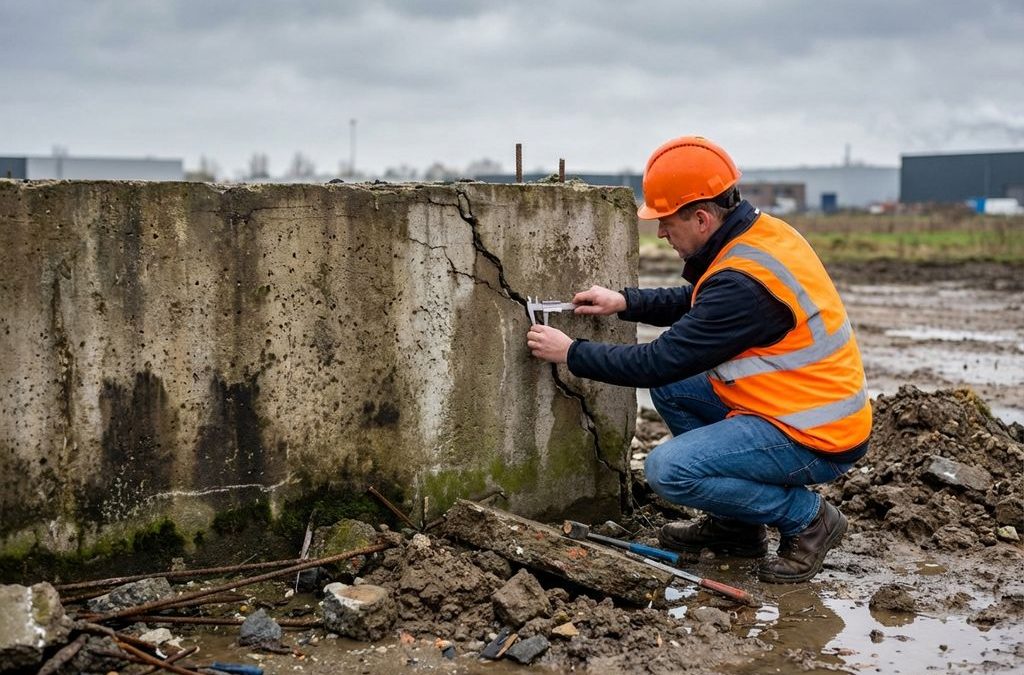
Foundation problems can be identified by various warning signs, such as cracks in walls, sagging floors, and doors that stick. These symptoms occur when a building’s foundation no longer provides adequate support or is settling unevenly. Early detection is crucial, as foundation problems can quickly worsen and lead to structural damage to the entire building.
What visible signs indicate potential foundation problems?
The most common visible signs of foundation problems include cracks in walls and ceilings, sagging floors, doors and windows that stick, and crooked walls. These symptoms indicate uneven settlement or a loss of load-bearing capacity in the foundation.
Cracks in walls are often the first warning sign. Pay particular attention to diagonal cracks that run upward or downward from the corners of windows and doors. Horizontal cracks in basements or underground rooms may indicate lateral pressure caused by ground movement. Vertical cracks are usually less serious, but still require monitoring.
Sagging or sloping floors are a clear sign of foundation problems. This is often noticeable because furniture starts to shift or because marbles roll across the floor. Gaps also form between the floor and the baseboard, or between the floor and the walls.
Doors and windows that suddenly become difficult to open or close are a sign that the building has warped due to foundation problems. This happens because the frames are being pushed out of their original rectangular shape by shifting walls.
Other warning signs include cracks in exterior walls, loose tiles, cracks in the foundation itself, and water in crawl spaces or basements that were previously dry.
How can you tell the difference between normal settlement and actual foundation damage?
Normal settlement mainly occurs during the first two years after construction and then stabilizes, whereas actual foundation damage can develop even years later and progressively worsen. Normal settlement usually causes small hairline cracks that do not grow larger.
Under normal settlement conditions, cracks are often less than 2 millimeters wide and stabilize within a few years. These cracks result from the natural process by which a new building settles on its foundation and building materials shrink as they dry out.
True foundation damage is characterized by progressive deterioration. Cracks become wider and longer, new cracks appear regularly, and symptoms such as doors that stick become worse. Often, multiple symptoms occur simultaneously rather than isolated cracks.
The location of cracks also provides clues. Normal settlement cracks often appear in random places where materials meet. Foundation cracks usually follow patterns related to the building’s load and the location of load-bearing elements.
Timing is key. If a building is more than five years old and new cracks appear or existing problems worsen, this usually indicates foundation issues rather than normal settling.
When should you have a professional foundation inspection performed?
A professional foundation inspection is necessary as soon as cracks widen to more than 5 millimeters, structural deformation occurs, or when multiple symptoms appear at the same time. It is also advisable to have an inspection performed when purchasing an older property.
Immediate action is required if cracks are wider than 10 millimeters, if floors are visibly sagging or sloping, if walls are out of plumb, or if doors and windows can no longer be opened. These signs indicate serious foundation problems that could pose a safety hazard.
Even with less severe symptoms, prompt action is recommended. Do not wait if cracks are visibly widening, new cracks are appearing regularly, or water is appearing in crawl spaces that were previously dry.
For preventive inspections, there are specific times when it is advisable to conduct an inspection: for buildings older than 30 years in areas with known soil issues, following periods of extreme drought or heavy rainfall, and before major renovations that alter the load on the foundation.
Modern foundation techniques make it possible to detect problems early on and provide targeted solutions. Delaying an inspection usually leads to higher costs and more extensive repairs.
What are the consequences of ignoring foundation problems?
Ignoring foundation problems leads to escalating damage, with small cracks developing into structural instability. Costs rise exponentially, as minor repairs turn into complete foundation replacement, often resulting in a temporary relocation.
Safety risks increase when foundation problems are left unaddressed. Walls may collapse, floors may give way, and the building may be declared uninhabitable. In extreme cases, a building may even have to be completely demolished.
The financial implications are significant. While early intervention can cost between 10,000 and 50,000 euros, a complete foundation replacement can easily run up to 100,000 euros or more. On top of that, there are costs for temporary housing, storage of household goods, and repair of secondary damage to finishes and systems.
The property’s value also drops dramatically. Homes with known foundation problems are difficult to sell and often fetch 20–30% less than comparable properties without such issues. Lenders are reluctant to finance properties with foundation defects.
Modern, vibration-free foundation techniques make it possible to resolve issues without causing disruption to the surrounding area. By taking timely action, both costs and impact remain manageable, and further damage can be prevented.
Do you notice any of these signs in your building? Don’t wait too long to seek professional advice. Early detection not only prevents higher costs but also protects the safety and value of your property. Foundation problems never resolve themselves, but with the right approach, they can be effectively resolved.
Frequently Asked Questions
How can I assess the severity of foundation problems on my own?
Meet de breedte van scheuren met een lineaal en monitor deze maandelijks door de datum naast de scheur te schrijven. Gebruik een waterpas om te controleren of vloeren en muren nog recht zijn. Scheuren breder dan 5mm of die zichtbaar groeien vereisen professionele beoordeling. Maak foto’s voor vergelijking over tijd.
What is the average cost of foundation repair, and is it covered by insurance?
Foundation repairs typically cost between €15,000 and €50,000 for preventive measures and between €50,000 and €150,000 for a complete renovation. Standard home insurance policies usually do not cover foundation damage, unless it is caused by sudden events such as water leaks. Check your policy and consider purchasing supplemental foundation insurance.
Can I continue to live in my house during foundation work?
With modern vibration-free techniques, you can often stay in your home, especially when preventive grouting or micropiles are used. For more extensive work, you may need to temporarily relocate for 2–6 weeks. The contractor will inform you in advance about the impact and possible alternatives, such as phased construction on a floor-by-floor basis.
How long does a professional foundation survey take, and what exactly does it involve?
A standard foundation survey takes 1–2 days and includes a visual inspection, soil testing with soil probing, and often an endoscopic inspection of the existing foundation. You will receive a report with findings and recommendations within 1–2 weeks. The cost ranges from €1,500 to €3,500, depending on the size and complexity of the property.
Are there seasonal factors that can exacerbate foundation problems?
Yes, dry summers cause clay soil to shrink, which can lead to foundation settlement, while wet winters can cause the soil to expand and create additional pressure. Be sure to inspect your home more closely after periods of extreme weather. Maintain proper drainage around the house and prevent water from pooling against the exterior walls to minimize seasonal damage.
What questions should I ask a foundation specialist before accepting a quote?
Ask for references from similar projects, what warranty is offered (at least 10 years), whether the method is vibration-free, and whether a fixed price is quoted. Have the specialist explain why their solution is the best fit for your situation and ask for a detailed schedule, including any potential disruptions.