
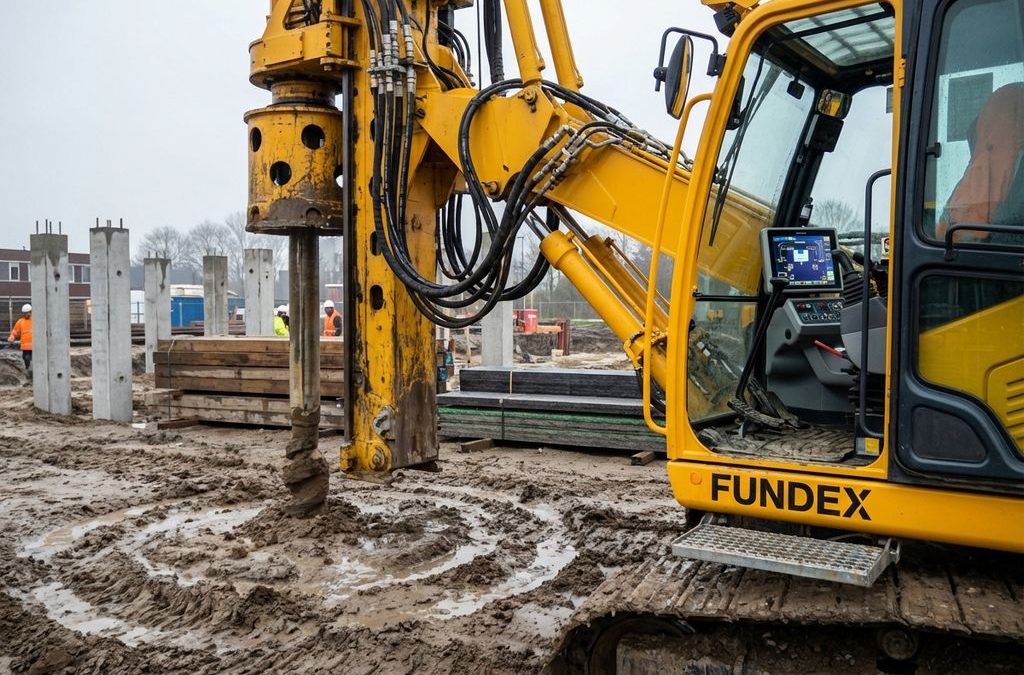
The foundation industry is on the cusp of a technological revolution, in which digitalization, sustainability, and vibration-free techniques are fundamentally transforming traditional methods. Modern foundation projects are increasingly incorporating zero-emission machinery, AI-driven processes, and advanced monitoring systems that boost efficiency and minimize environmental impact.
What innovative foundation techniques are on the horizon?
Robotics and AI-driven foundation processes are revolutionizing the way we build foundations by utilizing automated drilling processes and intelligent decision-making. These technologies make it possible to carry out foundation work with unprecedented precision, with machines independently analyzing soil conditions and determining the optimal foundation strategy.
Advanced materials, such as high-performance composites and smart concrete mixtures, offer new possibilities for more sustainable and stronger foundations. These materials can adapt to changing conditions and often have a longer service life than traditional alternatives.
Automation in drilling processes uses sensor technology and machine learning to make real-time adjustments during foundation work. This results in more consistent quality and reduces the need for manual intervention. Smart monitoring systems continuously collect data on foundation performance and can predict potential problems before they occur.
The integration of these technologies means that future foundation projects can be carried out more quickly, accurately, and reliably, while at the same time improving worker safety by reducing the need for manual tasks in hazardous conditions.
How is sustainability transforming the foundation industry?
Zero-emission foundation solutions are becoming the new standard thanks to the use of fully electric machinery and HVO100 fuel, which reduces local CO2 emissions by 90%. This shift toward cleaner technologies is driven by stricter environmental regulations and growing demand from clients for sustainable construction processes.
Circular foundation techniques focus on reusable materials and minimizing waste during the foundation process. This includes developing demountable foundation systems that can be reused at the end of a building’s life cycle, as well as recycling existing foundation materials.
The development of energy-efficient foundation solutions, such as energy piles, combines structural support with sustainable energy generation. These innovative systems use significantly less energy for cooling and heating buildings than traditional systems.
Environmental legislation, such as the ESG guidelines for 2030, 2040, and 2050, is compelling companies to implement concrete sustainability measures. This is creating a market in which sustainable foundation solutions are not only desirable but are also becoming essential for obtaining building permits and certifications, such as BREEAM Excellent.
Why is vibration-free foundation work becoming increasingly important?
Vibration-free foundation techniques are becoming essential in urban areas, as they drastically reduce disruption to nearby residents and prevent damage to existing buildings. These methods make it possible to install foundations in densely built-up areas without the usual vibration and noise disturbances.
The growing demand for these techniques is driven by the increasing density of cities and the need to build in complex environments. Traditional pile-driving methods are often no longer acceptable due to their impact on the immediate surroundings and the risks they pose to historic buildings or sensitive structures.
Screw pile foundations and controlled installation methods offer an alternative, in which piles are, piles it were, screwed into the ground rather than driven. This process generates minimal vibration and allows work to be carried out in relatively small areas, which is crucial for urban projects with limited space.
The benefits for existing structures are significant, as vibration-free methods greatly reduce the risk of cracking and structural damage. This is particularly important in renovation and expansion projects, where new foundations must be installed close to existing structures.
What role does digitalization play in modern foundation projects?
BIM integration and digital tools are transforming the planning and execution of foundation projects by enabling 3D modeling and data-driven decision-making. These technologies allow teams to identify potential issues before physical work begins and optimize coordination among different construction disciplines.
Real-time monitoring systems continuously collect data on soil conditions, foundation performance, and equipment status. This information is analyzed immediately to ensure quality and to make immediate adjustments when parameters deviate from the desired values.
Predictive maintenance uses collected data to optimize the maintenance of foundation machinery. By analyzing patterns in machine behavior, maintenance can be scheduled before breakdowns occur, which increases equipment availability and prevents unexpected delays.
Data-driven decision-making in foundation projects utilizes historical project data, soil analyses, and real-time measurements to determine the most suitable foundation method. This results in more accurate cost estimates, better planning, and a higher likelihood of success for complex projects.
The integration of these digital tools not only improves technical execution but also enhances communication with clients through transparent reporting and visualization of progress. If you have specific questions about modern foundation solutions or would like to request a quote for a project, we recommend contacting us for expert advice tailored to your specific project requirements.
Frequently Asked Questions
How long will the transition to fully sustainable foundation techniques take?
The transition to fully sustainable foundation techniques is a gradual process that will be completed over the next 5 to 10 years. Many companies are already investing in zero-emission machinery and HVO100 fuel, but full implementation depends on technological developments, regulations, and the availability of sustainable alternatives. The 2030 ESG guidelines are significantly accelerating this process.
What is the cost of vibration-free foundation methods compared to traditional techniques?
Vibration-free foundation methods are initially 10–20% more expensive than traditional pile-driving methods, but these additional costs are often offset by lower insurance premiums, the absence of damage claims from nearby residents, and faster permitting procedures. In urban areas where traditional methods are not permitted, vibration-free techniques are often the only option.
What skills do foundation workers need to develop to keep up with new technologies?
Foundation workers need to upgrade their skills in areas such as working with BIM software, interpreting sensor data, and operating automated machinery. In addition, knowledge of sustainable materials and vibration-free installation methods is becoming increasingly important. Many companies offer in-house training or partner with educational institutions.
How reliable are AI-driven foundation processes in unexpected soil conditions?
AI-driven systems are highly reliable because they continuously learn from new data and identify patterns that humans might overlook. When faced with unexpected soil conditions, these systems can make real-time adjustments and suggest alternative strategies. However, human supervision is always required for complex decisions and exceptional situations.
Can existing foundation-laying machines be converted for zero-emission operation?
Many existing foundation-driving machines can be converted to electric power or adapted to run on HVO100 fuel, depending on their age and technical specifications. Retrofit solutions are often more cost-effective than complete replacement, but not all machines are suitable for conversion. A technical analysis by specialists is required to determine feasibility.
How is quality ensured in automated foundation processes?
Automated foundation processes utilize continuous monitoring via sensors that measure parameters such as depth, angle, bearing capacity, and vibrations. This data is compared in real time with predefined quality standards, and the system automatically adjusts when deviations are detected. All data is documented for quality control and certification.
What are the main challenges involved in implementing circular foundation techniques?
The biggest challenges are the lack of standardized, demountable systems, higher initial costs, and the need for new logistics processes to facilitate material reuse. In addition, circular foundation construction requires close collaboration among all parties in the construction supply chain, and the entire life cycle of buildings must be planned differently. Regulations and certification often lag behind technical capabilities.