
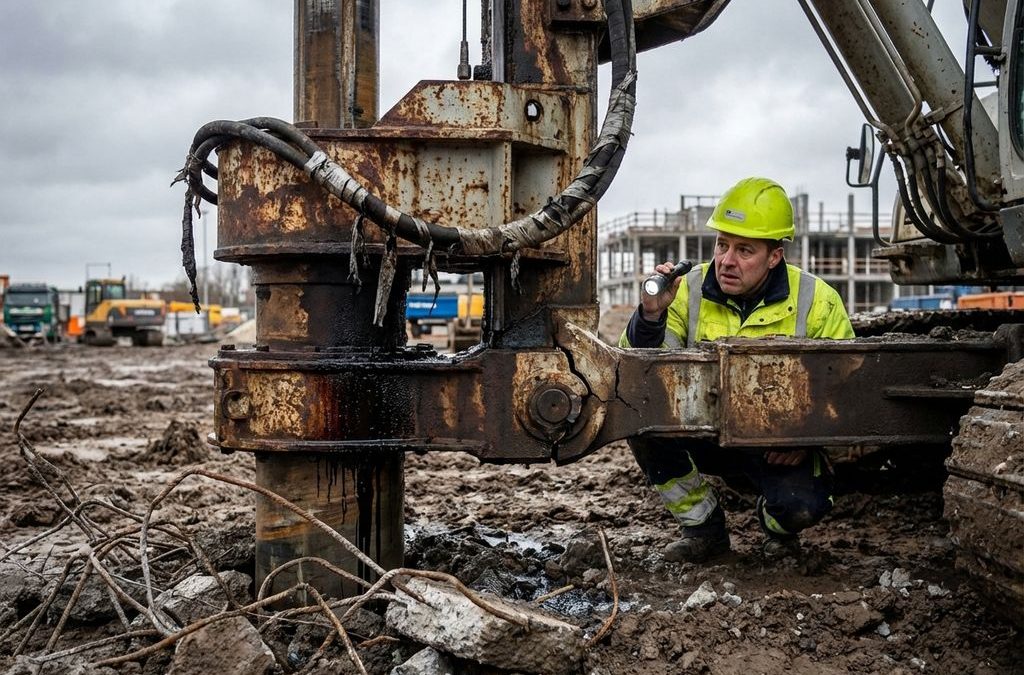
Foundation work presents various challenges that can affect the stability, costs, and schedule of construction projects. The most common issues arise from unfavorable soil conditions, disruption caused by traditional piling methods, technical complications during construction, and unexpected cost overruns. Thorough preparation and the right choice of foundation method can prevent many of these problems.
What problems can arise from poor soil conditions during foundation work?
Poor soil conditions can cause problems with bearing capacity, stability, and settlement that can compromise the foundation. Different soil types present specific challenges that significantly influence the choice of foundation method.
Sandy soil can cause instability when driving piles, especially in loose sand layers where the soil walls may collapse. This leads to issues with pile diameters and can negatively affect bearing capacity. Clay soil, on the other hand, presents other complications, such as long settlement times and variable bearing capacity depending on moisture conditions.
Peat soil may well present the greatest challenge due to its very low bearing capacity and high compressibility. In such conditions, conventional foundation methods can fail, necessitating the use of specialized techniques. Mixed soil types create unpredictable conditions, with properties that can vary over short distances.
For very soft soil conditions ranging from 1 to 20 MPa, specialized systems are required. In extremely soft layers, permanent casing systems are often chosen to prevent deformation of the pile shaft. In very heavy layers, grout injection techniques can be used to increase bearing capacity and ensure stability.
Why does traditional pile driving cause disturbances, and how can you prevent this?
Traditional pile driving causes noise pollution, vibrations, and spatial constraints that pose particular problems in urban areas. These nuisances can lead to complaints from nearby residents, damage to adjacent buildings, and restrictions on working hours.
Noise pollution is caused by driving piles the ground, which can result in noise peaks that far exceed permissible levels. Vibrations can travel through the ground and cause damage to nearby structures, especially older buildings with sensitive foundations.
Space constraints pose a practical problem, as traditional pile-driving machines require a lot of working space and are often unsuitable for tight construction sites. This limits flexibility in project planning and can lead to higher costs due to logistical complications.
Modern, vibration-free alternatives offer a solution to these problems. These techniques work by, piles , screwing piles into the ground rather than driving them in, thereby preventing vibrations from disturbing the surrounding area. This allows foundation work to be carried out on relatively small sites and makes it possible to work in sensitive environments without causing disruption to the immediate vicinity.
What are the most common technical problems encountered during foundation work?
Technical issues during foundation work include pile failure, insufficient bearing capacity, and water-related problems that can jeopardize the quality and progress of the project. These complications often require immediate adjustments to the construction method.
Pile failure occurs when piles collapse piles installation or under load due to material defects, improper installation, or unexpected soil conditions. This can lead to repair work and delays, especially when the failure is not detected until after installation during quality inspections.
Insufficient bearing capacity occurs when actual soil conditions differ from the expectations based on the geotechnical investigation. This may mean that piles need to be installed piles or that a different foundation method is required to achieve the required capacity.
Water-related issues can manifest as groundwater inflow, artesian pressure, or unstable borehole walls in water-saturated soil. These conditions can disrupt the drilling process and affect the quality of the foundation due to cement leaching or concrete contamination.
Modern foundation techniques address these issues by using permanent steel pipes that ensure stability, soil-displacement methods that do not cause soil settlement, and controlled installation procedures that allow for real-time monitoring. This enables problems to be detected and addressed at an early stage.
How can you prevent cost overruns in foundation projects?
Cost overruns are caused by unexpected geotechnical issues, the selection of an inappropriate method, and inadequate planning. Thorough preparation and a realistic assessment of risks are essential to prevent budget overruns.
Geotechnical surprises pose the greatest cost risks, as unexpected soil conditions can lead to changes in foundation methods, pile lengths, or material specifications. Inadequate soil investigation during the design phase can result in cost increases of between 20 and 40 percent of the original budget.
Choosing the wrong foundation method leads to inefficiency and higher costs. A method that is not suitable for the specific soil and project conditions can result in longer construction times, increased material consumption, and necessary adjustments during construction.
Inadequate planning of logistics, material delivery, and equipment capacity causes delays that directly translate into higher costs. This is especially true for projects in urban environments, where access is limited and coordination with other construction activities is crucial.
Preventive measures include a comprehensive geotechnical investigation prior to the project, a realistic risk analysis with contingency reserves of between 10 and 15 percent, and the selection of flexible foundation methods that can be adapted to changing conditions. By utilizing proven techniques and experienced specialists, many unexpected costs can be avoided.
Successfully addressing foundation problems requires a combination of technical expertise, the right choice of method, and careful planning. By anticipating potential challenges in advance and applying modern, flexible foundation techniques, most problems can be prevented or effectively resolved. For complex projects, it is advisable to contact foundation specialists early on so they can advise on the most suitable approach for your project’s specific circumstances.
Frequently Asked Questions
How do I know if my construction site is suitable for vibration-free foundation methods?
A geotechnical survey provides definitive information about soil conditions and suitability for various foundation methods. Factors such as the groundwater level, the bearing capacity of the subsoil, and the proximity of sensitive buildings determine whether vibration-free techniques are feasible. Based on this data, a foundation specialist can advise you on which method is most suitable for your specific situation.
What should I do if unexpected soil conditions are encountered during foundation work?
Stop direct met de werkzaamheden en raadpleeg uw funderingsspecialist voor een herziening van de aanpak. Documenteer de afwijkende condities met foto’s en boorbeschrijvingen voor eventuele kostenverrekening. Vaak kan de funderingsmethode worden aangepast zonder grote vertragingen, mits er snel wordt gehandeld en alternatieven beschikbaar zijn.
How much extra budget should I set aside for unforeseen circumstances during foundation work?
Set aside at least 10–15% of the foundation budget for contingencies, but in cases of complex soil conditions, 20–25% may be more realistic. This percentage depends on the quality of the preliminary investigation, the complexity of the project, and the chosen foundation method. Discuss this percentage in advance with your contractor and foundation specialist.
Can I perform foundation work in the winter or in bad weather?
Moderne funderingstechnieken zijn minder weergevoelig dan traditionele methoden, maar vorst kan het beton- en groutwerk beïnvloeden. Bij temperaturen onder 5°C zijn speciale maatregelen nodig zoals verwarmde materialen of tijdelijke bescherming. Plan funderingswerk bij voorkeur in de periode april-oktober voor optimale omstandigheden en lagere risico’s.
How long does it take for a foundation to be fully load-bearing?
This depends on the foundation method and the materials used. Concrete piles typically require 28 days to reach full strength, while steel piles can bear loads piles . For grout injections, a curing time of 24–48 hours must be taken into account. Your foundation specialist can draw up a specific schedule based on the chosen method and project conditions.
What warranties do I receive for foundation work, and how long are they valid?
Standard warranty periods range from 5 to 10 years for foundation work, depending on the method and contractor. Check whether the warranty covers both material and workmanship defects, and inquire about additional insurance for damage to surrounding buildings. Make sure all warranty terms are set out in writing and keep all quality reports and certificates.