
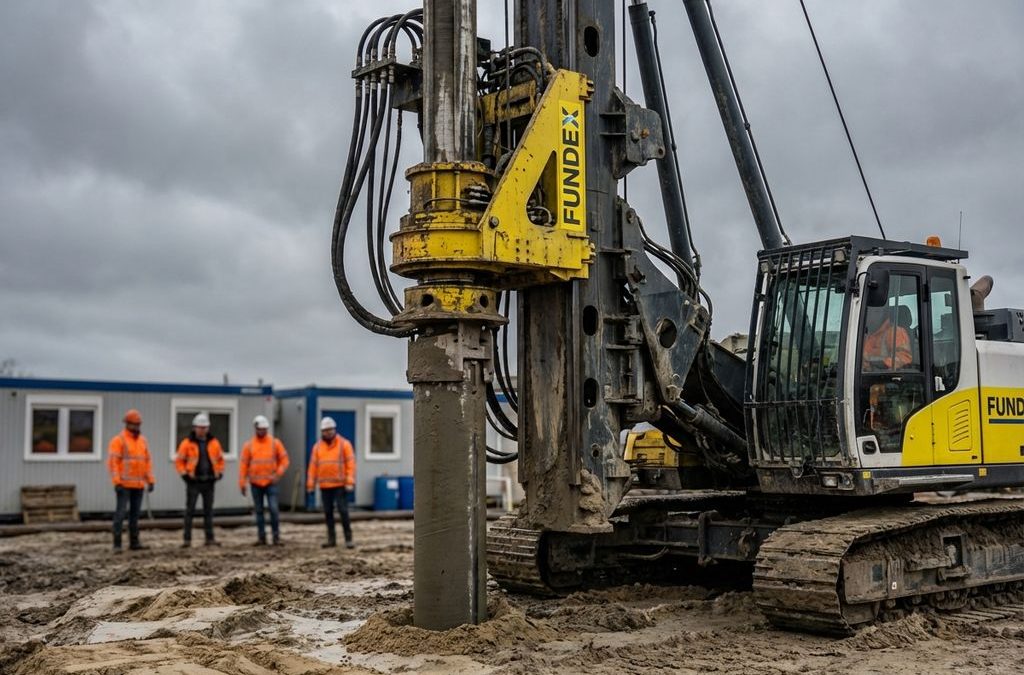
Electric foundation machines are innovative construction machines that run entirely on electric power instead of traditional diesel. These machines offer emission-free foundation solutions with significantly reduced noise pollution. They are increasingly being used for sustainable construction projects in urban areas where strict environmental requirements apply.
What are electric foundation machines, and why are they important?
Electric pile-driving machines are fully electric construction machines that install foundation piles without producing any direct harmful emissions. Unlike traditional diesel-powered machines, they do not produce local CO2 emissions, nitrogen oxides, or particulate matter during the pile-driving process.
The main difference lies in the power source. While conventional foundation machines use diesel engines, electric models operate using powerful electric motors and battery systems. This results in much quieter operation, which is essential for projects in residential neighborhoods or inner-city areas.
The benefits for the environment and the workplace are significant. Electric pile-driving machines cause no direct air pollution on the construction site and produce up to 90% less noise than diesel alternatives. For construction companies, this means they can comply with the increasingly stringent ESG guidelines and environmental regulations expected by 2030, 2040, and 2050.
What types of electric foundation machines are available?
There are various types of electric foundation equipment available, each suited for specific foundation techniques. Battery-powered drilling rigs form the basis for most electric foundation work and are available in various sizes.
Electric pile drivers offer an alternative to traditional diesel pile drivers and are particularly suitable for projects where noise pollution must be kept to a minimum. Hybrid machines combine electric power with a smaller diesel generator as a backup, offering flexibility at sites without a stable power supply.
Specific models, such as the CD20E, have been developed for various foundation techniques. These machines can be used to install different types of piles, ranging from traditional concrete piles to innovative composite piles. Supporting equipment is also being electrified, such as grout injection pumps, which were previously always diesel-powered.
How do electric foundation machines work in practice?
Electric foundation machines are powered by high-performance electric motors that run on lithium-ion battery packs or a direct mains connection. The electric drive system offers better control over speed and torque, allowing operators to work with greater precision than with diesel alternatives.
Battery capacity varies by machine, but modern systems can typically operate continuously for 6 to 8 hours on a single charge. Charging can be done using standard industrial power outlets or special fast-charging stations. Variable speed control is particularly useful in applications that require different drilling speeds.
On construction sites, these machines offer greater flexibility thanks to their quiet operation. They can be used during regular working hours in residential areas without disturbing nearby residents. Their precision control makes them ideal for delicate projects where the accurate positioning of foundation elements is crucial. International projects, such as those in Sweden, demonstrate that these zero-emission machines can be used worldwide.
What are the advantages of electric foundation machines over diesel ones?
The environmental impact is the biggest advantage of electric foundation machines. While diesel machines emit CO2, NOx, and particulate matter locally, electric models produce no direct emissions. This is crucial for projects in areas with strict emissions regulations or where diesel-powered equipment is only permitted to a limited extent.
Noise levels are significantly lower with electric machinery. This results in less disturbance for nearby residents and a completely different experience of construction work in urban areas. As a result, construction companies can work longer hours and are less likely to face complaints or work stoppages.
Operating costs are often lower due to the elimination of diesel consumption and reduced maintenance costs. Electric motors have fewer moving parts than diesel engines, resulting in lower maintenance requirements. For urban projects, electric machines often offer the only way to comply with local environmental regulations.
The decision to use electric foundation equipment aligns perfectly with the construction industry’s push toward sustainability. An increasing number of clients are specifically requesting zero-emission foundation solutions, giving companies that invest in electric equipment a competitive advantage. For more information about sustainable foundation solutions, please explore our services or contact us directly to find the right solution for your project.
Frequently Asked Questions
How long does it take to charge an electric foundation drill, and can I keep working while it’s charging?
Het opladen van een elektrische funderingsmachine duurt doorgaans 2-4 uur via een snellaadstation of 6-8 uur via een standaard industriële aansluiting. Doorwerken tijdens het opladen is mogelijk wanneer de machine is aangesloten op een directe netverbinding, maar niet bij batterijlading. Veel bedrijven plannen daarom laadsessies tijdens pauzes of ’s nachts.
Are electric pile-driving machines suitable for all soil types and foundation depths?
Electric pile drivers perform exceptionally well in most soil types, including sand, clay, and peat. For very hard ground or extreme depths (over 30 meters), hybrid models may be more suitable due to their higher peak force. The CD20E and similar models have proven effective at depths of up to 25 meters in standard Dutch soil conditions.
What happens if the battery runs out during a critical foundation operation?
Moderne elektrische funderingsmachines hebben uitgebreide batterijmonitoring die vroegtijdig waarschuwt bij lage lading. In noodgevallen kunnen hybride modellen overschakelen op diesel, of kan een mobiele generator worden aangesloten. Het is belangrijk om altijd reservecapaciteit in te plannen en laadschema’s af te stemmen op de werkplanning.
How do the purchase costs of electric foundation machines compare to diesel alternatives?
Electric foundation machines typically have purchase costs that are 15–25% higher than those of comparable diesel models. However, this investment is offset by lower operating costs (no diesel consumption), reduced maintenance, and access to projects with strict environmental requirements. The payback period is usually between 3 and 5 years, depending on the frequency of use.
What infrastructure do I need on my construction site for electric foundation machines?
For electric foundation machines, you need at least a 32A or 63A industrial power connection (400V). For optimal performance, a dedicated charging infrastructure with a 125A capacity is recommended. Ensure that connections are weatherproof and that there is sufficient cable length to allow for flexible operation. Many suppliers offer advice on the required electrical installation.
Can electric foundation machines operate in extreme weather conditions?
Electric foundation machines are designed for Dutch weather conditions and can operate effectively at temperatures ranging from -10°C to +40°C. Extreme cold can affect battery performance (10–15% loss of capacity), while rain is not a problem thanks to IP65 protection. In temperatures below -15°C, it is recommended to preheat the batteries.