
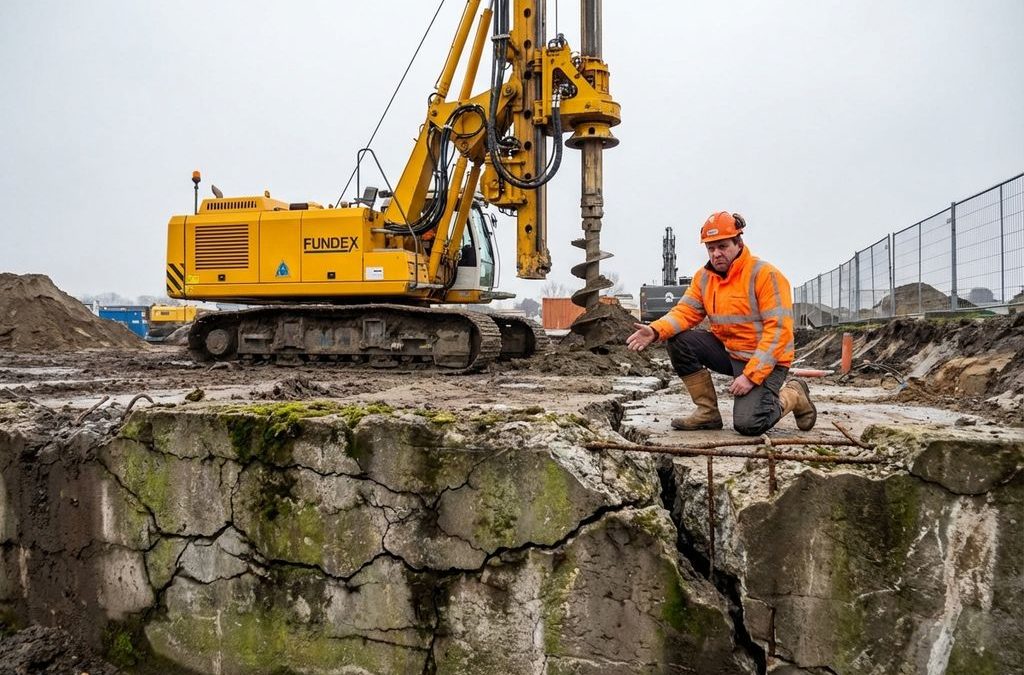
A foundation must be replaced when structural damage occurs that cannot be repaired safely. This usually happens in the event of serious subsidence, extensive cracks in load-bearing elements, or when the foundation has lost its load-bearing capacity due to age or changed soil conditions. The decision depends on the severity of the damage, safety requirements, and the cost comparison between repair and replacement.
What signs indicate that your foundation may need to be replaced?
Cracks in load-bearing walls, subsidence of the building, and moisture problems in the basement are the most alarming signs that your foundation may need to be replaced. Doors and windows that no longer close properly, visible subsidence of floors, and water penetrating the foundation also indicate serious problems.
Other warning signs include cracks in exterior walls that widen over time, especially horizontal cracks that indicate ground movement. Inside, you may see cracks appearing where walls and ceilings meet, or stairs that start to "hang" because the underlying structure is sinking.
Moisture problems often manifest themselves as white efflorescence on walls, mold growth in basements, or a constant damp smell. These signs indicate that the foundation has lost its waterproof properties, which can further compromise its structural integrity.
Also pay attention to changes in your immediate surroundings: new construction projects, altered water flows, or groundwork can affect your existing foundation and cause new problems.
When is repair sufficient, and when does a foundation really need to be replaced?
Repair is usually sufficient for local damage, small cracks, or limited subsidence that does not threaten structural stability. Complete replacement is necessary when more than 40% of the foundation is affected, in the event of serious landslides, or when the load-bearing capacity is fundamentally compromised.
Repairs may include sealing cracks, local reinforcements, or adjusting the drainage around the building. These solutions work well when the underlying foundation is still solid and has only suffered superficial damage.
Replacement becomes necessary in situations where the foundation has structurally failed. This often occurs in older buildings where the original foundation no longer meets modern standards, or in cases of serious soil problems such as subsiding clay layers or groundwater issues.
The choice is also influenced by future plans: in the event of expansion or renovation, it may be wiser to immediately lay a new, stronger foundation that is suitable for the new situation. Modern techniques such as vibration-free foundations make it possible to work effectively even in densely built-up areas, without causing nuisance to local residents.
How long does a new foundation last and what determines its lifespan?
A new foundation typically lasts between 50 and 100 years, depending on the type of foundation, soil conditions, and maintenance. Concrete foundations often have a longer lifespan than wooden piles, while modern techniques such as steel pipe piles can last up to 80 years or longer.
The lifespan is largely determined by soil conditions. In very soft soil layers or with fluctuating groundwater levels, a foundation can deteriorate more quickly. That is why modern foundation specialists often opt for techniques that are specifically suited to the local soil conditions.
Modern foundation methods such as vibration-free foundations often offer a longer service life because they cause less stress during installation and are more resistant to landslides. These techniques also ensure that the surrounding soil is less disturbed, which improves stability.
Maintenance plays a crucial role in determining the lifespan. Regular checks of the drainage system, preventing water damage around the foundation, and taking timely action when minor problems arise can significantly extend the lifespan. Changes in the use of the building (heavier loads) can also affect its durability.
What are the costs of foundation replacement and what factors determine the price?
The cost of foundation replacement varies between €15,000 and €50,000 for an average home, depending on the size, accessibility, soil type, and technique chosen. In complex situations or with very soft soil layers, the costs may be higher.
Important cost factors include the type of soil and the depth at which the foundations need to be laid. Very soft soil layers require specialized techniques that are more expensive but also offer a longer service life. The accessibility of the location also plays a major role: working in confined spaces or densely built-up areas requires smaller machines and more manual labor.
The chosen foundation technique has a significant impact on the price. Traditional methods are often cheaper to purchase, but modern vibration-free techniques can offer cost advantages through faster installation, less disruption, and lower risks of damage to surrounding buildings.
Additional costs arise from necessary preparations such as soil testing, permits, and possible temporary support for the building during the work. Finishing work after the foundations have been laid, such as repairing paving and landscaping, must also be included in the budget.
Professional advice is essential for an accurate cost estimate. Every situation is unique, and what may initially appear to be more expensive can ultimately save money due to lower maintenance costs and a longer service life. Therefore, always request a detailed quote that takes into account all aspects of your specific project.
Frequently Asked Questions
How long does the foundation replacement process take from start to finish?
A complete foundation replacement takes an average of 2-6 weeks, depending on the size of the project and weather conditions. This includes preparation, groundwork, installation of the new foundation, and finishing. In complex situations or with unforeseen ground conditions, it may take longer.
Can I continue to live in my house during the foundation replacement?
In most cases, it is possible to continue living in your home, although there will be periods of noise and vibration. Temporary relocation may be necessary in the event of extensive work requiring temporary support for the entire building. Discuss this with your contractor in advance.
What permits do I need for foundation replacement?
You will usually need an environmental permit for foundation replacement, especially if this affects the structure of the building. You may also need to notify the municipality if heavy equipment is to be used. Your contractor can advise you on this and take care of the application for you.
What happens if, during the work, it turns out that the damage is worse than expected?
In the event of unforeseen damage, work will be temporarily halted to reassess the situation. You will then receive a revised quote detailing the additional work required. That is why it is important to make clear agreements in advance about how additional work will be handled.
How can I prevent future foundation problems after replacement?
Ensure good drainage around your home, prevent flooding around the foundation, and have a visual inspection carried out every 5-10 years. Watch out for early signs such as small cracks and have them investigated in good time. It is also wise to pay extra attention to your foundation when there are major construction projects in the neighborhood.
Is foundation replacement covered by my home insurance?
Standard home insurance policies do not usually cover foundation problems caused by normal wear and tear or subsidence. Only acute damage, such as a burst water pipe, may be covered. Check your policy and consider taking out additional foundation insurance for extra protection.
What warranty do I get on a new foundation and what does it entail?
Professional foundation companies usually provide a 10-20 year warranty on their work, depending on the techniques and materials used. This warranty covers construction defects and material flaws, but not damage caused by external factors such as ground subsidence due to new construction projects in the area.