
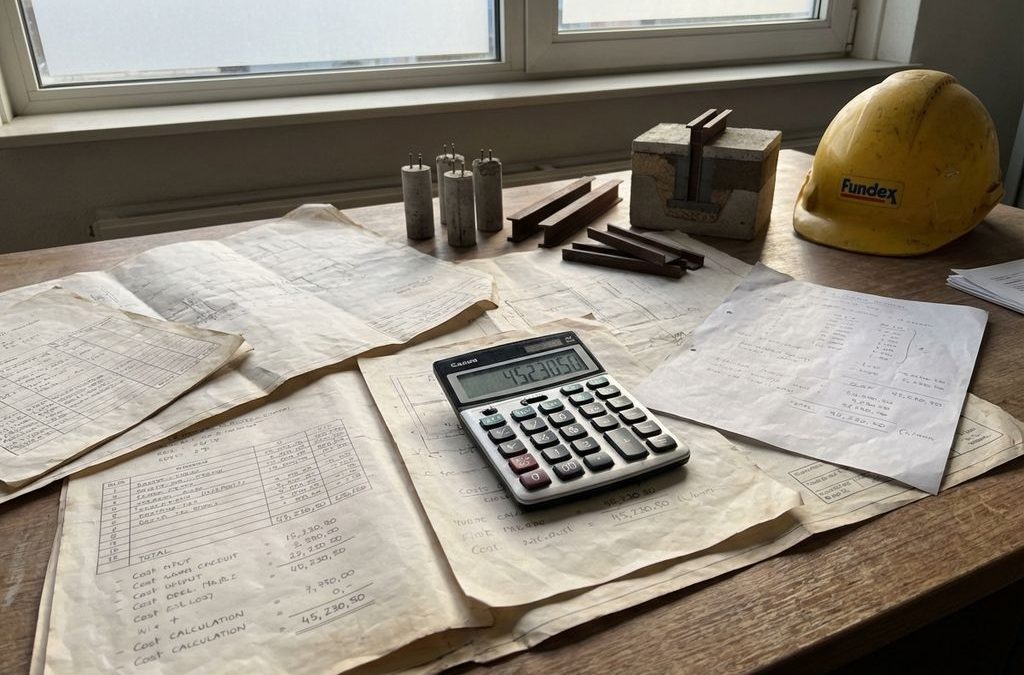
The cost of foundation work varies greatly depending on the method and project. Traditional piles cost between €80 and €150 per linear meter, while modern vibration-free techniques cost between €100 and €200 per meter. The total project costs are determined by soil conditions, depth, accessibility, and the chosen foundation method. Although advanced techniques often seem more expensive, they can ultimately be more cost-effective due to time savings and lower indirect costs.
What factors determine the cost of foundation work?
The cost of foundation work is determined by five main factors: soil conditions, foundation depth, accessibility of the construction site, project size, and the chosen foundation method. These factors have a major influence because they directly determine which machines can be used, how much time the project will take, and what additional measures are required.
Soil conditions play a crucial role in determining costs. Very soft soil layers with a strength of 1–20 MPa often require special techniques, such as permanent casing systems, while very heavy soil layers require grout injection techniques. These adjustments have a significant impact on both material and implementation costs.
The foundation depth determines which machines are suitable and how much material is required. Deep foundations up to 40 meters require heavier equipment with platform heights of up to 48 meters and weights of 63 to 210 tons. This has a direct impact on transport and installation costs.
Accessibility and workspace influence the choice of foundation machinery. Confined spaces require more compact rigs set-up areas of 2 x 3 meters, while standard projects require set-up areas of 7 x 12 meters. Adjoining structures less than 0.9 meters away may require additional measures and adapted equipment.
What are the costs of traditional piles versus modern foundation methods?
Traditional piles cost between €80 and €150 per linear meter on average, while modern vibration-free foundation methods cost between €100 and €200 per meter. However, the price difference of approximately 20–30% is often offset by lower indirect costs and shorter execution times with modern techniques.
Traditional pile driving often involves additional costs for damage prevention and nuisance reduction. Vibration damage to nearby buildings, sound insulation measures, and possible permit costs can significantly increase the total budget. Modern vibration-free techniques, such as the Fundex pile or tubex pile, largely eliminate these risks.
The total project costs often paint a different picture than the pure material costs. Vibration-free methods work faster because there are no waiting times for vibration-sensitive work in the surrounding area. This saves labor costs and shortens the project duration, which leads to significant cost savings, especially for large projects.
Modern electric-powered machines, such as the CD20E, are also emission-free and use HVO100 fuel, reducing localCO2 emissions by 90%. These sustainability benefits may, in some cases, qualify for subsidies or tax breaks.
How do you calculate the total cost of a foundation project?
The total cost of a foundation project consists of six main components: material costs (30–40% of the total), labor costs (25–35%), machine costs (20–25%), permits and research (5–10%), unforeseen costs (10–15%), and any damage prevention measures. A systematic approach prevents budget overruns.
Material costs include the piles , grout, steel pipes, and auxiliary materials. Fundexpiles with grout injection require prefab pile elements, while Tubexpiles use permanent steel pipes. This choice affects both material and labor costs.
Machine costs vary greatly depending on the type of project. Compact rigs confined spaces cost differently than large machines for deep foundations. The choice between diesel-powered and electric machines, such as the F4800E, affects both rental and operating costs.
Don't forget to include indirect costs: soil investigations, structural calculations, permit applications, and possible archaeological surveys. In complex soil conditions, additional tests may be necessary, such as static pressure and tensile tests or ultrasonic integrity measurements.
Always reserve 10–15% for unforeseen circumstances. Unusual soil conditions, weather delays, or unexpected obstacles in the soil can cause additional costs. A thorough risk analysis in advance will help you estimate this buffer realistically.
When are more expensive foundation methods ultimately cheaper?
More expensive foundation methods often become cheaper for projects in densely built-up areas, time-critical construction projects, locations with limited accessibility, and situations in which traditional pile driving can cause nuisance or damage. The higher initial investment is offset by time savings, lower risks, and avoided damage costs.
In densely built-up areas, vibration-free techniques eliminate the risk of foundation damage to neighboring buildings. The costs of damage inspection, monitoring, and any repair work can far exceed the additional costs of vibration-free foundations. What's more, you avoid legal proceedings and reputational damage.
Modern techniques offer considerable advantages for time-critical projects. Vibration-free methods can often be carried out 24 hours a day without noise restrictions. This shortens the project duration and saves on time-related costs, such as crane and scaffolding rental, construction site setup, and project management.
Special circumstances, such as laying foundations from pontoons, working in confined spaces, or installing piles at angles of up to 4:1, often make advanced techniques indispensable. The additional costs for specialized equipment are then outweighed by the possibility of being able to carry out the project at all.
Sustainability considerations are playing an increasingly important role. Electric-powered machines and HVO100 fuel significantly reduceCO2 emissions. In tenders with sustainability criteria, these technologies can make the difference between winning and losing a contract, meaning that the additional costs are recouped through project acquisition.
Choosing the right foundation method requires careful consideration of all cost factors. Modern vibration-free techniques may seem more expensive, but they often offer a better overall solution due to lower risks, shorter execution times, and higher quality. For an accurate cost assessment of your specific project, please contact us for a no-obligation quote that takes all relevant factors into account.
Frequently Asked Questions
How long does an average foundation project take and what does this mean for the costs?
An average foundation project takes 2-6 weeks, depending on the number piles the method chosen. Vibration-free techniques are often 30-50% faster because there are no waiting times for vibration-sensitive activities. This time saving translates directly into lower labor costs and shorter rental periods for machines and rigs.
What unexpected costs will I encounter during foundation work?
Common unexpected costs include unusual ground conditions (€5,000-15,000 extra), archaeological finds that cause delays, and damage to underground utilities. Weather delays in winter can also cause up to 20% extra costs. That is why we always recommend a 10-15% buffer for unforeseen circumstances.
Can I save money by doing some of the foundation work myself?
Foundation work requires specialized machinery and expertise, which means that DIY projects are not possible. However, you can save costs by carrying out the preparatory groundwork yourself, such as excavation and site preparation. This can save you 5-10% of the total project costs.
How can I prevent cost overruns in my foundation project?
Ensure a thorough soil investigation beforehand (costs €2,000-5,000 but prevents much more expensive surprises), request multiple quotes from certified contractors, and opt for fixed price agreements that include unforeseen circumstances. Communicate clearly about accessibility and special requirements to avoid additional costs later on.
Are subsidies available for sustainable foundation techniques?
Yes, some municipalities offer subsidies for CO2-neutral construction methods, and sustainable foundation techniques can earn points in BREEAM or LEED projects. The MIA/Vamil scheme may also apply to investments in environmentally friendly machinery. Ask your municipality about local regulations.
What should I do if the quotes differ significantly?
Large price differences (more than 25%) often indicate different interpretations of the project. Request a detailed cost breakdown for each component, check whether all suppliers are using the same foundation depth and method, and clarify any uncertainties about soil conditions or accessibility before making your choice.