
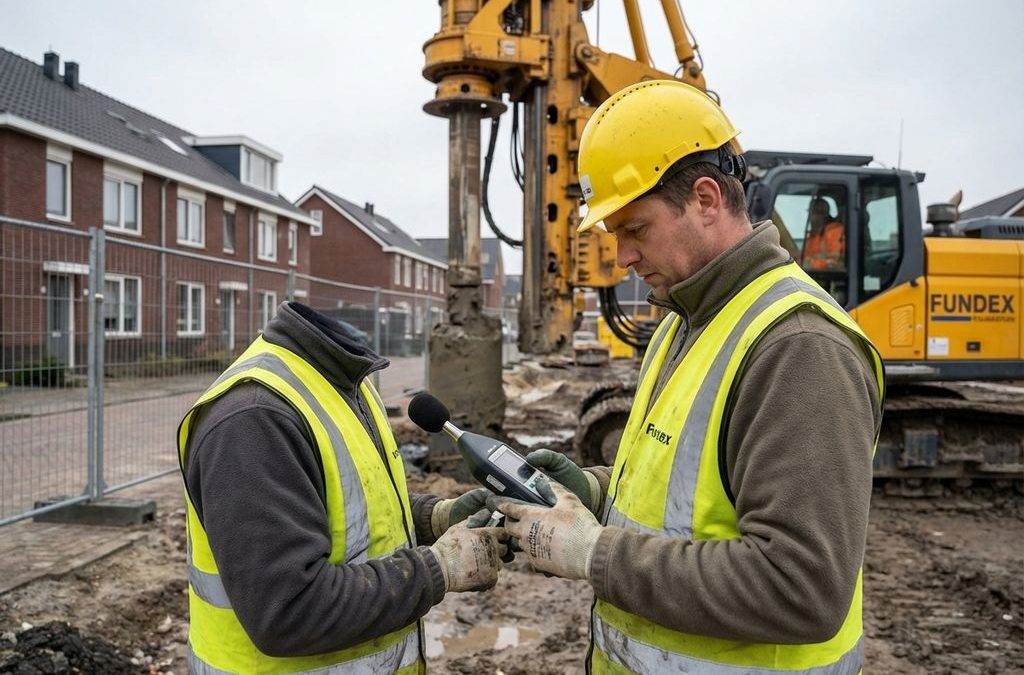
Noise pollution during foundation work is strictly regulated by Dutch legislation, with specific decibel standards and permitted working hours. Traditional pile driving methods often cause noise pollution, but modern, vibration-free techniques offer quiet alternatives without compromising on quality. Good preparation, clear communication with local residents, and the choice of low-noise foundation methods help to prevent problems and complaints during construction projects.
What are the legal noise standards for foundation work?
Dutch municipalities apply noise standards between 55 and 70 decibels for foundation activities, depending on the location and time of day. Residential areas have stricter standards than industrial areas. Measurements are taken at the nearest noise-sensitive location, in accordance with the Noise Abatement Act and municipal regulations.
The exact standards vary per municipality, but general guidelines are:
- Residential areas during the day: maximum 55-60 decibels
- Mixed areas: maximum 60-65 decibels
- Industrial areas: maximum 65-70 decibels
- Evening and night period: 5-10 decibels lower
Municipalities may grant temporary exemptions for urgent projects, but this requires extensive justification and often additional noise-reducing measures. Exceeding the standards may result in the work being halted and fines being imposed.
When can you lay foundations without causing noise pollution?
Foundation work is permitted on working days between 7 a.m. and 6 p.m. and on Saturdays between 8 a.m. and 5 p.m. Work is prohibited on Sundays and public holidays, unless a special exemption has been granted for urgent projects or infrastructure works.
Specific time rules per day:
- Monday through Friday: 7:00 a.m. to 6:00 p.m.
- Saturday: 8:00 a.m. to 5:00 p.m. (in some municipalities until 4:00 p.m.)
- Sundays and public holidays: Prohibited without exemption
- Evening hours: Only with a permit and additional noise restrictions
Exceptions apply to urgent repairs to infrastructure, dangerous situations, and projects of national importance. Seasonal restrictions may also apply, for example during the breeding season in nature reserves or during holiday periods in tourist areas.
What alternatives exist to noisy foundation methods?
Modern, vibration-free foundation techniques produce significantly less noise than traditional pile driving. Screw piles are driven into the ground without hammering, while bored piles permanent casing minimize noise pollution. Electric foundation machines completely eliminate diesel engine noise.
Effective low-noise alternatives:
- piles: Vibration-free, installed by screwing, with only the sound of the drill motor
- piles: A soil-displacement system that operates without vibrations or hammering
- Drilled pipe piles: Silent drilling technique with minimal environmental noise
- Electric machines: Completely emission-free and quiet operation, ideal for urban areas
These methods maintain the same load-bearing capacity and quality as traditional techniques. They are particularly suitable for densely populated urban areas, where noise pollution is a crucial factor. The only noise comes from the drill motor, which is considerably quieter than pile driving or vibratory methods.
How can you prevent problems with local residents during foundation work?
Timely communication with local residents prevents complaints and increases understanding for necessary work. Inform local residents at least two weeks in advance about the schedule, working hours, and expected noise levels. A noise plan with concrete measures demonstrates professionalism and commitment to the living environment.
Practical communication steps:
- Information letter: Explanation of the work, schedule, and contact details
- Neighborhood meeting: Personal explanation and opportunity to ask questions
- Daily updates: Information about progress and any changes
- Complaints procedure: Clear contact person for questions and reports
Apply for the appropriate permits from the municipality in good time, including noise exemptions if necessary. With traditional foundation methods, noise barriers, adjusted working hours, and sound insulation can provide additional protection. Professional planning and transparent communication create support and help prevent legal proceedings.
Successful projects combine technical expertise with careful environmental management. By opting for low-noise foundation techniques early on in the process and communicating proactively with all parties involved, every foundation project runs smoothly and within the legal framework.
Frequently Asked Questions
How do I measure whether my foundation project exceeds noise standards?
Use a certified sound level meter (class 1 or 2) and place it at the nearest noise-sensitive location, usually at the facade of residential buildings. Measure during representative working periods and document the results. For official measurements, it is advisable to engage a recognized acoustic agency that can measure in accordance with NEN standards.
What does it cost to switch to low-noise foundation methods?
Modern low-noise techniques such as Fundex orpiles typicallypiles 10–20% more than traditional pile driving, but this is often offset by shorter project durations, lower permitting costs, and the avoidance of work stoppages due to complaints. Electric machines have higher rental costs but save on fuel costs and reduce environmental impact.
Can I obtain a noise exemption for urgent jobs outside the permitted hours?
Yes, but only for genuine emergencies such as threats to public safety, infrastructure failures, or acute structural problems. You must submit a reasoned request to the municipality at least 48 hours in advance, including a plan for additional noise reduction measures. The municipality assesses each request individually.
What noise reduction measures can I apply to traditional foundation methods?
Place mobile sound barriers around the workplace (up to 10 dB reduction), use sound-insulating covers on pile drivers, opt for smaller machines where possible, and schedule the loudest activities during the least sensitive hours. Coordinating the pile driving layers and using rubber mats under machines also helps to dampen noise.
How far in advance do I need to inform local residents about foundation work?
Inform local residents at least two weeks in advance by sending them a letter containing all relevant information. For large projects or in densely populated areas, three to four weeks is better. If possible, organize an information meeting and provide a clear point of contact during the work for questions or complaints.
What happens if I exceed the noise standards during foundation work?
If the limits are exceeded, the municipality may issue a warning, demand additional measures, or, in serious cases, halt the work. Fines range from €500 to €25,000, depending on the severity and recurrence. In addition, you may be held civilly liable for damage to local residents caused by noise pollution.
Are there seasonal restrictions for foundation work?
Ja, tijdens het broedseizoen (maart-augustus) gelden in natuurgebieden vaak strengere regels. In toeristische zones kunnen gemeenten beperkingen opleggen tijdens vakantieperiodes. Ook kunnen weersomstandigheden invloed hebben – bij harde wind draagt geluid verder en kunnen strengere normen gelden. Controleer altijd de lokale verordeningen en milieuvoorschriften.