
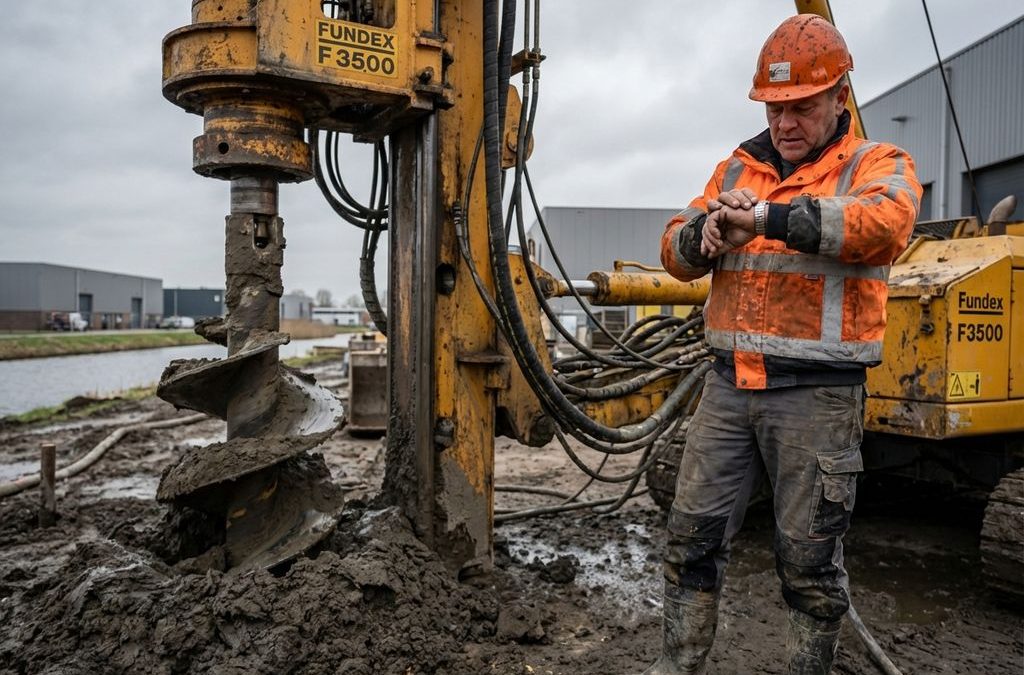
The duration of a foundation project varies greatly depending on the situation, ranging from a few days for a single-family home to several months for large infrastructure projects. Several factors determine this duration: soil type, project size, the chosen foundation technique, weather conditions, and permitting procedures. Modern vibration-free techniques can significantly reduce construction time compared to traditional methods.
What actually determines how long a foundation project takes?
The duration of foundation work depends on five key factors that together determine the overall schedule. Soil type plays a crucial role: soft soil layers require different techniques than hard, rocky soils. The size of the project determines the number piles the required capacity of the equipment.
The chosen foundation technique directly affects the speed of construction. Vibration-free methods, such as thepile be used in soil layers ranging from 1 to 20 MPa and are often faster than traditional pile driving. For very heavy soil layers, grout injection techniques may be necessary, which affects the construction time.
Weather conditions are an important factor in planning. Rain, frost, and strong winds can slow down or temporarily halt work. Permitting procedures and approvals must be secured in advance to prevent delays during construction.
The availability and accessibility of the construction site determine what equipment can be used. Confined spaces require compact machines, which affects the pace of work. Coordination with other construction activities requires careful planning to avoid conflicts.
How long does foundation work take for different types of construction projects?
For single-family homes, foundation work typically takes between 1 and 3 days, depending on soil conditions and the number piles required. Townhouses and small projects fall into the same category due to their limited size and standard foundation requirements.
Apartments and medium-sized residential projects typically require 1 to 2 weeks of foundation work. The number piles significantly higher and the loads are heavier, which requires more time for the careful installation and inspection of each pile.
Office buildings and commercial projects typically take 2 to 6 weeks to complete the foundation work. These buildings have more complex foundation designs involving various pile types and lengths. The higher loads often require deeper foundations and more extensive quality controls.
Major infrastructure projects such as bridges, viaducts, and industrial complexes can take months to complete. These projects often require specialized foundation techniques, involve complex logistics, and entail extensive quality assurance. Each pile be individually tested and approved before the project can proceed.
Which foundation techniques are the fastest, and why?
Modern vibration-free techniques such aspiles often faster than traditional pile driving because they are more efficient to install. These piles , so to speak, screwed into the ground using axial pressure and torque, which allows for smooth and controlled installation without waiting for vibrations to dissipate.
piles permanent steel casings are particularly well-suited for rapid installation in soft soil layers. The permanent casing prevents deformation of the pile shaft and allows for continuous load transfer. This technique is ideal for projects where time is of the essence.
Traditional pile-driving methods can be slower due to the rest periods required between driving piles allow vibrations to subside. In sensitive areas, noise restrictions that limit working hours must be taken into account.
Choosing electric foundation machines can increase efficiency due to their immediate availability of torque and power. They require no warm-up time and can operate at full power immediately, which helps speed up project completion.
Drilled pipe piles are efficient for projects involving a large number of piles identical specifications. Once set up, the drilling process can be repeated relatively quickly, especially under favorable soil conditions and when there is sufficient working space for the equipment.
What can cause delays in the scheduling of foundation work?
Adverse weather conditions are the most common cause of delays in foundation projects. Prolonged rain makes the construction site impassable for heavy equipment, while frost can make earthwork impossible. Strong winds limit the use of tall rigs crane operations.
Unexpected soil conditions can cause significant delays when the actual soil conditions differ from those described in the geotechnical reports. For example, encountering very heavy soil layers—where standardpiles arepiles —may require a switch to grout injection techniques.
Permit procedures and changes to construction plans during the project lead to unavoidable delays. It is essential that all necessary approvals be secured in advance and that any changes be communicated to all parties involved in a timely manner.
Logistical challenges such as limited access to the construction site, problems with material delivery, or malfunctions in foundation machinery can bring work to a standstill. For projects in urban areas with limited space, careful planning of equipment and transportation is crucial.
Coordination with other construction disciplines requires careful planning. Delays in earthwork or sewer installation have a direct impact on foundation planning. Effective project planning anticipates these dependencies and builds in buffers for unforeseen circumstances.
Accurately estimating the duration of your specific foundation project requires a customized approach. Every project has unique circumstances that affect the schedule. By carefully analyzing all factors in advance and selecting the appropriate foundation technique, you can minimize delays and develop a realistic timeline. Contact us for a detailed project assessment and timeline tailored to your specific situation.
Frequently Asked Questions
How can I keep the costs of my foundation project under control if it takes longer than planned?
Ask for a fixed price upfront, with clear agreements regarding additional work and unforeseen circumstances. Ensure you have adequate contractual protection against delays caused by external factors such as weather or permits. Consider conducting a risk analysis with your contractor to identify potential cost increases in advance.
What should I do if, during the foundation work, it turns out that the soil is different than expected?
Stop het werk onmiddellijk en laat een geotechnisch expert de situatie beoordelen. Documenteer alle bevindingen met foto’s en rapportages voor eventuele claims bij verzekeringen. Bespreek met uw aannemer welke alternatieve funderingstechnieken mogelijk zijn en wat de gevolgen zijn voor planning en budget.
Can I have the foundation work done while other construction activities are ongoing?
This is possible but requires very careful coordination among all disciplines. Foundation work often takes priority because other activities depend on it. Allow sufficient space for foundation equipment and ensure that other activities are not disrupted by vibrations or access issues.
What steps can I take to prevent delays in my foundation project?
Obtain all necessary permits well in advance and ensure you have up-to-date geotechnical reports. It is best to schedule the project outside of the winter and rainy seasons. Ensure the construction site is easily accessible and coordinate with utility companies regarding underground cables and pipes.
How do I know if the chosen foundation method is the best option for my project in terms of time and cost?
Get quotes from several foundation specialists using different techniques, and compare not only the price but also the completion time. Ask for a detailed explanation of why a particular technique is recommended. Consider the overall project schedule, not just the foundation costs.
What are the consequences if foundation work is delayed for the rest of my construction project?
Delays in foundation work usually have a direct impact on all subsequent construction phases, as the foundation serves as the basis for the entire structure. This can lead to higher costs due to downtime for other contractors, delays in material deliveries, and potential seasonal price fluctuations. Therefore, always build a buffer into your overall schedule.