
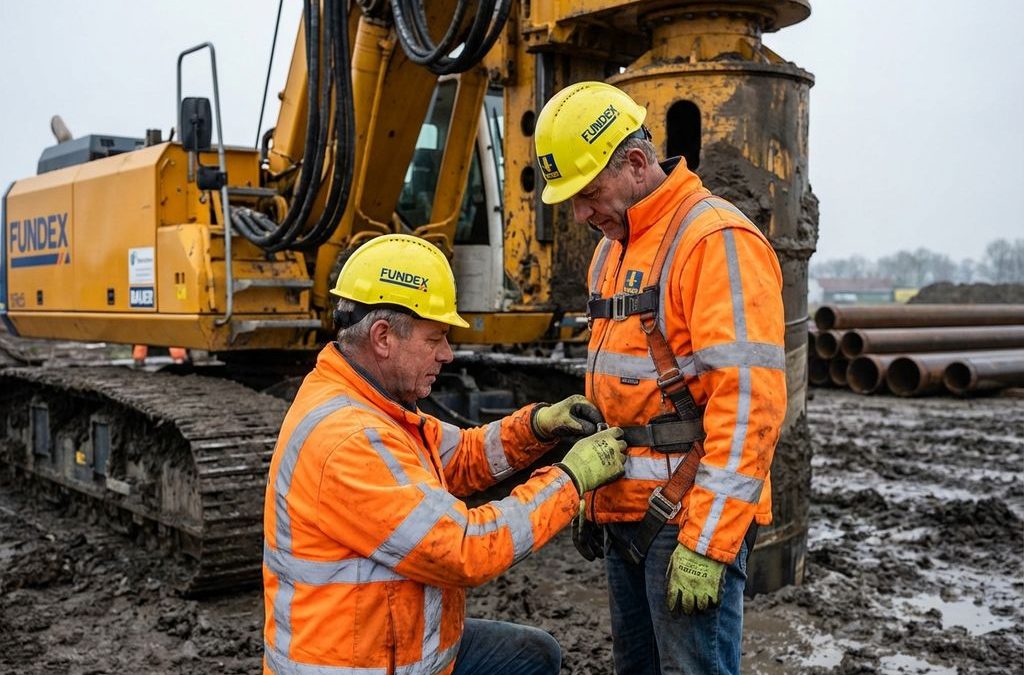
Safety in foundation work requires a comprehensive approach that combines modern techniques, appropriate protective equipment, and systematic risk analysis. Vibration-free foundation methods significantly reduce many traditional safety risks, while personal protective equipment and effective planning remain essential for all work. This guide covers the key safety issues that professionals encounter when planning and executing foundation projects.
What safety risks are associated with traditional foundation methods?
Traditional foundation methods, such as pile driving, pose significant safety risks due to vibrations, noise pollution, and ground instability. These methods can cause damage to surrounding buildings, create stress for workers due to noise exposure, and result in unpredictable ground movement that threatens both the construction site and nearby structures.
The primary risk associated with conventional pile driving methods stems from the vibrations and shock waves that travel through the ground. These can weaken the foundations of nearby buildings, cause cracks in walls, and, in extreme cases, even cause structural damage. The impact is particularly significant in older buildings with weaker foundations or in urban environments where structures are closely spaced.
Noise pollution is a second major safety concern. Traditional pile driving produces noise peaks of around 100–120 decibels, which is not only harmful to workers’ hearing but can also cause stress and health problems for nearby residents. This noise exposure requires extensive protective measures and often significantly limits working hours.
Soil instability occurs when piles disrupt the natural soil structure. This can lead to unexpected ground subsidence, shifts in existing foundations, or the formation of voids that do not cause problems until later. As a result, workers are at risk of accidents due to collapsing work pits or unexpected ground movement during construction.
How do modern vibration-free foundation techniques improve safety?
Modern vibration-free foundation techniques eliminate most of the safety risks associated with traditional methods by piles into the ground rather than driving them. This “pile driving without driving” technology reduces vibrations to virtually zero, drastically limits noise levels, and prevents soil disturbance that can lead to instability.
The screw technique works by applying axial pressure and torque, causing the pile to penetrate the ground pile without generating shock waves. Systems such as thepile a steel guide tube with a loose drill bit that is withdrawn in an oscillating motion, thereby keeping the soil structure intact and preventing vibrations that could propagate to surrounding structures.
The noise level associated with vibration-free methods remains limited to approximately 70–80 decibels, comparable to normal traffic. This eliminates the risk of hearing damage to workers and prevents noise pollution in the surrounding area. As a result, work can also be carried out in noise-sensitive environments without the need for extensive noise-reduction measures.
Ground-displacement techniques such as thepile space by displacing soil rather than excavating it. This preserves the natural soil pressure and prevents subsidence or soil displacement that can occur with traditional methods. For workers, this means a more stable working environment with a lower risk of soil-related accidents.
Modern electric foundation machines further improve safety through emission-free operation and lower noise levels. These machines can also operate in confined spaces, thereby avoiding hazardous working positions and cramped working conditions.
What personal protective equipment is essential for foundation work?
Essential personal protective equipment for foundation work includes hearing protection, safety helmets, steel-toed safety boots, and reflective safety vests. Traditional foundation methods require additional protection against vibrations and increased noise exposure, whereas modern vibration-free techniques require less intensive protection.
Hearing protection remains essential for all foundation work, including vibration-free methods. Use earplugs or earmuffs that provide at least 25–30 decibels of attenuation. During traditional pile driving, dual hearing protection (earplugs plus earmuffs) is often necessary due to the extreme noise levels.
Safety helmets must comply with the latest EN 397 standards and provide protection against falling objects, electric shocks, and side impacts. Choose helmets with chin straps for work near rotating machinery, and consider helmets with integrated hearing protection for comprehensive protection.
Safety boots with steel toes and puncture-resistant soles are essential for foundation work. The soles must be able to withstand sharp objects such as rebar, while the steel toes protect against falling tools or pile sections. Slip-resistant soles are essential on construction sites, which are often muddy.
Reflective safety vests ensure visibility around large machinery and vehicles. Choose vests with Class 2 or 3 reflectivity for optimal visibility, especially when working near traffic or at dusk.
Work gloves should protect against cuts, abrasions, and chemicals such as concrete and grout. Use gloves with a good grip when handling rebar and tools, but avoid loose-fitting gloves near running machinery.
How do you conduct an effective risk analysis for foundation projects?
An effective risk analysis for foundation projects begins with the systematic identification of all potential hazards, followed by an assessment of the likelihood and impact of each risk. The analysis must pay particular attention to soil conditions, the chosen foundation method, environmental factors, and worker safety, resulting in concrete control measures and monitoring procedures.
Begin the analysis with site surveys and soil borings to determine soil conditions, groundwater levels, and bearing capacity. Identify underground pipes, cables, and existing foundations that could pose a hazard during construction. Document all findings and clearly mark risk areas on site plans.
Next, evaluate the chosen foundation method in light of the specific conditions. Traditional pile-driving methods require a thorough analysis of the vibration and noise impact on surrounding buildings, while vibration-free methods such as screw piles involve other considerations, such as machine accessibility and the effects of soil displacement.
Assess environmental factors such as proximity to buildings, traffic conditions, weather conditions, and available workspace. Determine how these factors may limit working hours, machine use, and safety measures. Plan alternative procedures for unforeseen circumstances.
Develop specific control measures for each identified risk. This includes selecting appropriate machinery, planning work sequences, establishing safety protocols, and training staff. Ensure clear communication procedures and emergency plans are in place.
Implement continuous monitoring throughout the project by conducting regular safety inspections, vibration and noise measurements as needed, and daily assessments of working conditions. Adjust procedures as circumstances change or new risks arise.
Document all findings, incidents, and adjustments for future projects. A thorough risk analysis not only lays the groundwork for safe execution but also helps optimize foundation methods and improve safety standards.
Safety in foundation work requires an integrated approach that combines modern techniques, appropriate protective measures, and systematic planning. Vibration-free foundation methods offer significant advantages, but still require careful preparation and adherence to safety protocols. For project-specific advice on safe foundation solutions, please contact us for an approach tailored to your situation.
Frequently Asked Questions
How long does it take to train staff in the use of vibration-free foundation techniques?
Training in vibration-free foundation techniques typically lasts 2–5 days, depending on the staff’s experience and the complexity of the equipment. Experienced pile drivers can often make the transition more quickly, while new employees need more time to learn both the techniques and safety procedures. Regular refresher training is recommended to keep skills up to date.
What should you do if unexpected vibrations occur while working with "vibration-free" methods?
Stop work immediately and check the machine settings and ground conditions. Unexpected vibrations may indicate machine malfunctions, unforeseen ground conditions, or improper use of the equipment. Have a technician inspect the machine and, if necessary, conduct additional ground surveys before resuming work.
How often should you check the effectiveness of personal protective equipment?
Controleer PBM’s dagelijks voor aanvang van het werk op beschadigingen, slijtage en juiste pasvorm. Voer wekelijks een grondige inspectie uit en vervang beschadigde uitrusting onmiddellijk. Gehoorbescherming en veiligheidshelmen hebben specifieke vervangingsintervallen volgens fabrikantrichtlijnen, meestal om de 2-5 jaar afhankelijk van gebruik en blootstelling.
What additional precautions are needed when performing foundation work in the winter?
Winter conditions require extra caution due to frozen ground, slippery surfaces, and reduced visibility. Use anti-slip equipment, ensure adequate lighting, and adjust work hours to account for shorter daylight hours. Check machinery more frequently for frozen hydraulic systems and allow for longer warm-up times for equipment.
How do you deal with local residents who complain about noise pollution, even when using vibration-free methods?
Communicate proactively with local residents by informing them in advance about the work, its expected duration, and noise levels. Designate a contact person for complaints and regularly measure noise levels to demonstrate that you are operating within the standards. Consider additional noise-reduction measures, such as noise barriers, if the situation warrants it.
What are the key warning signs that a risk analysis needs to be revised?
Revise the risk analysis immediately in the event of unexpected ground conditions, changes to the project plan, incidents or near-misses, and complaints from local residents. New information about underground obstacles, weather changes that affect the work, or equipment problems are also reasons to revise the analysis.